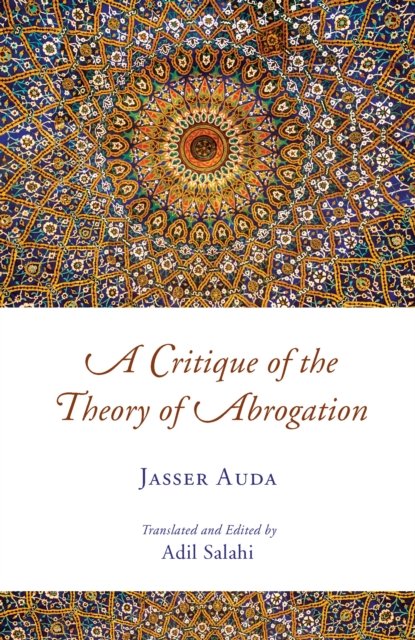
A Critique of the Theory of Abrogation
Av Dr. Jasser Auda, 2019.
A typical definition of abrogation found in the Jurisprudence literature is: ?The (heavenly) replacement of one juridical ruling with a later ruling.?
This book surveys the subject of abrogation (Naskh) in the Qur?an, Hadith and Islamic literature, illustrating that the concept of abrogation was introduced after the Prophetic era in order to explain certain verses of the Qur?an and what has come to be termed as ?conflicting Prophetic narrations? (Mukhtalaf al-Hadith).
It goes on to suggest that the ?abrogated rulings? were merely pre-Islamic cultural practices that contradicted with Islamic principles. Furthermore, the book argues that the Qur?anic verses and Prophetic narrations, which were misperceived as ?conflicting,? should be contextually situated and applied according to the wisdom behind them with the practical implication being the validation of all Qur?anic verses and (authentic) Prophetic instructions regardless of their perceived contradictions. Allowing Islamic jurisprudence to retain its flexibility within changing circumstances.
Jasser Auda's clear and brave views on abrogation in the Islamic tradition challenge orthodoxy and dogma in favor of flexibility and practical implication.
A typical definition of abrogation found in the Jurisprudence literature is: ?The (heavenly) replacement of one juridical ruling with a later ruling.?
This book surveys the subject of abrogation (Naskh) in the Qur?an, Hadith and Islamic literature, illustrating that the concept of abrogation was introduced after the Prophetic era in order to explain certain verses of the Qur?an and what has come to be termed as ?conflicting Prophetic narrations? (Mukhtalaf al-Hadith).
It goes on to suggest that the ?abrogated rulings? were merely pre-Islamic cultural practices that contradicted with Islamic principles. Furthermore, the book argues that the Qur?anic verses and Prophetic narrations, which were misperceived as ?conflicting,? should be contextually situated and applied according to the wisdom behind them with the practical implication being the validation of all Qur?anic verses and (authentic) Prophetic instructions regardless of their perceived contradictions. Allowing Islamic jurisprudence to retain its flexibility within changing circumstances.
Ikke tilgjengelig for Klikk&Hent
Midlertidig tomt på lager
Bestillingsvare. Forventes sendt om ca 12 dager
Oppdag mer
A Critique of the Theory of Abrogation
Av Dr. Jasser Auda, 2019.
A typical definition of abrogation found in the Jurisprudence literature is: ?The (heavenly) replacement of one juridical ruling with a later ruling.?
This book surveys the subject of abrogation (Naskh) in the Qur?an, Hadith and Islamic literature, illustrating that the concept of abrogation was introduced after the Prophetic era in order to explain certain verses of the Qur?an and what has come to be termed as ?conflicting Prophetic narrations? (Mukhtalaf al-Hadith).
It goes on to suggest that the ?abrogated rulings? were merely pre-Islamic cultural practices that contradicted with Islamic principles. Furthermore, the book argues that the Qur?anic verses and Prophetic narrations, which were misperceived as ?conflicting,? should be contextually situated and applied according to the wisdom behind them with the practical implication being the validation of all Qur?anic verses and (authentic) Prophetic instructions regardless of their perceived contradictions. Allowing Islamic jurisprudence to retain its flexibility within changing circumstances.
Jasser Auda's clear and brave views on abrogation in the Islamic tradition challenge orthodoxy and dogma in favor of flexibility and practical implication.
A typical definition of abrogation found in the Jurisprudence literature is: ?The (heavenly) replacement of one juridical ruling with a later ruling.?
This book surveys the subject of abrogation (Naskh) in the Qur?an, Hadith and Islamic literature, illustrating that the concept of abrogation was introduced after the Prophetic era in order to explain certain verses of the Qur?an and what has come to be termed as ?conflicting Prophetic narrations? (Mukhtalaf al-Hadith).
It goes on to suggest that the ?abrogated rulings? were merely pre-Islamic cultural practices that contradicted with Islamic principles. Furthermore, the book argues that the Qur?anic verses and Prophetic narrations, which were misperceived as ?conflicting,? should be contextually situated and applied according to the wisdom behind them with the practical implication being the validation of all Qur?anic verses and (authentic) Prophetic instructions regardless of their perceived contradictions. Allowing Islamic jurisprudence to retain its flexibility within changing circumstances.
Oppdag mer
Ikke tilgjengelig for Klikk&Hent
Midlertidig tomt på lager
Bestillingsvare. Forventes sendt om ca 12 dager
Ved å fullføre kjøpet aksepterer du kjøpsvilkårene.