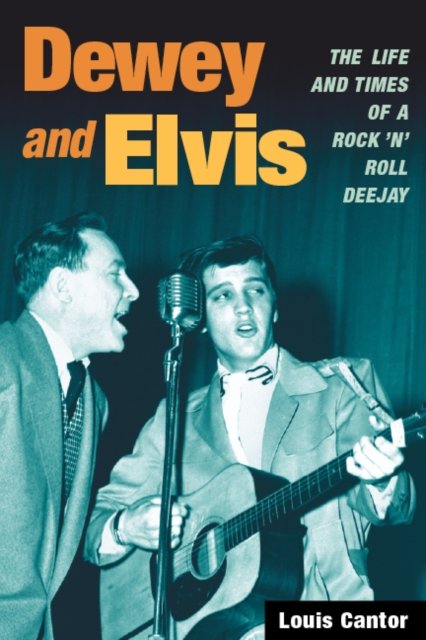
Dewey and Elvis
Av Louis Cantor, 2010.Del av serien Music in American Life.
The Life and Times of a Rock 'n' Roll Deejay
Beginning in 1949, while Elvis Presley and Sun Records were still virtually unknown--and two full years before Alan Freed famously "discovered" rock 'n' roll - Dewey Phillips brought the budding new music to the Memphis airwaves by playing Howlin' Wolf, B. B. King, and Muddy Waters on his nightly radio show Red, Hot and Blue. The mid-South's most popular white deejay, "Daddy-O-Dewey" soon became part of rock 'n' roll history for being the first major disc jockey to play Elvis Presley and, subsequently, to conduct the first live, on-air interview with the singer. Louis Cantor illuminates Phillips's role in turning a huge white audience on to previously forbidden race music. Phillips's zeal for rhythm and blues legitimized the sound and set the stage for both Elvis's subsequent success and the rock 'n' roll revolution of the 1950s. Using personal interviews, documentary sources, and oral history collections, Cantor presents a personal view of the disc jockey while restoring Phillips's place as an essential figure in rock 'n' roll history.
Ikke tilgjengelig for Klikk&Hent
Midlertidig tomt på lager
Bestillingsvare. Forventes sendt om ca 10 dager
Oppdag mer
Dewey and Elvis
Av Louis Cantor, 2010.Del av serien Music in American Life.
The Life and Times of a Rock 'n' Roll Deejay
Beginning in 1949, while Elvis Presley and Sun Records were still virtually unknown--and two full years before Alan Freed famously "discovered" rock 'n' roll - Dewey Phillips brought the budding new music to the Memphis airwaves by playing Howlin' Wolf, B. B. King, and Muddy Waters on his nightly radio show Red, Hot and Blue. The mid-South's most popular white deejay, "Daddy-O-Dewey" soon became part of rock 'n' roll history for being the first major disc jockey to play Elvis Presley and, subsequently, to conduct the first live, on-air interview with the singer. Louis Cantor illuminates Phillips's role in turning a huge white audience on to previously forbidden race music. Phillips's zeal for rhythm and blues legitimized the sound and set the stage for both Elvis's subsequent success and the rock 'n' roll revolution of the 1950s. Using personal interviews, documentary sources, and oral history collections, Cantor presents a personal view of the disc jockey while restoring Phillips's place as an essential figure in rock 'n' roll history.
Oppdag mer
Ikke tilgjengelig for Klikk&Hent
Midlertidig tomt på lager
Bestillingsvare. Forventes sendt om ca 10 dager
Ved å fullføre kjøpet aksepterer du kjøpsvilkårene.
