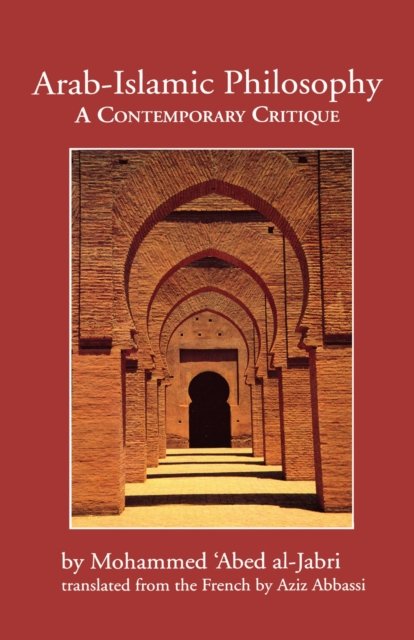
Arab-Islamic Philosophy
Mohammed ‘Abed al-Jabri
PocketEngelsk
Del av serien CMES Middle East Monograph Series

Av Shams C. Inati, 2026.
A General Introduction
A unified narrative of medieval Islamic philosophy grounded in primary sources Students approaching Islamic philosophy for the first time need a text that integrates historical context with sustained philosophical analysis. Selected Pillars of Islamic Philosophy: A Guide for Students provides a continuous narrative tracing the development of Islamic philosophy through the thirteenth century, covering six foundational thinkers: al-Kindi, al-Farabi, Ibn Sina, Ibn Bajja, Ibn Tufayl, and Ibn Rushd. Drawing on primary Arabic sources, the book examines major themes including God, the soul, knowledge, good and evil, and the afterlife. It situates philosophical discussion within the rise of Kalam and the translation movement, treating both Eastern and Western medieval Islamic traditions. Fresh interpretations of specific topics, such as al-Farabi's conception of the afterlife, distinguish the analysis. The book also provides: Summaries and definitions of key terms that orient readers within complex theological and philosophical debates across the traditionIntegrated background on Islam, theology, and the translation movement connecting intellectual context to each philosopher's arguments and conclusionsClear signposting of debates and disagreements among the six thinkers, helping readers trace the evolution of core ideasA coherent student-friendly format designed to prepare readers for more advanced engagement with primary philosophical sourcesCoverage of both Eastern and Western medieval Islamic philosophical traditions within a single continuous narrative framework Designed for undergraduate and graduate courses in Islamic philosophy, medieval philosophy, philosophy of religion, and Middle Eastern intellectual history, this book prepares students for advanced work with primary sources while serving instructors seeking a concise, unified teaching text and offering scholars in the field a valuable resource for their own research and study.
Ikke tilgjengelig for Klikk&Hent
Forhåndsbestill
Forventes i salg 19.11.2026
Av Shams C. Inati, 2026.
A General Introduction
A unified narrative of medieval Islamic philosophy grounded in primary sources Students approaching Islamic philosophy for the first time need a text that integrates historical context with sustained philosophical analysis. Selected Pillars of Islamic Philosophy: A Guide for Students provides a continuous narrative tracing the development of Islamic philosophy through the thirteenth century, covering six foundational thinkers: al-Kindi, al-Farabi, Ibn Sina, Ibn Bajja, Ibn Tufayl, and Ibn Rushd. Drawing on primary Arabic sources, the book examines major themes including God, the soul, knowledge, good and evil, and the afterlife. It situates philosophical discussion within the rise of Kalam and the translation movement, treating both Eastern and Western medieval Islamic traditions. Fresh interpretations of specific topics, such as al-Farabi's conception of the afterlife, distinguish the analysis. The book also provides: Summaries and definitions of key terms that orient readers within complex theological and philosophical debates across the traditionIntegrated background on Islam, theology, and the translation movement connecting intellectual context to each philosopher's arguments and conclusionsClear signposting of debates and disagreements among the six thinkers, helping readers trace the evolution of core ideasA coherent student-friendly format designed to prepare readers for more advanced engagement with primary philosophical sourcesCoverage of both Eastern and Western medieval Islamic philosophical traditions within a single continuous narrative framework Designed for undergraduate and graduate courses in Islamic philosophy, medieval philosophy, philosophy of religion, and Middle Eastern intellectual history, this book prepares students for advanced work with primary sources while serving instructors seeking a concise, unified teaching text and offering scholars in the field a valuable resource for their own research and study.
Ikke tilgjengelig for Klikk&Hent
Forhåndsbestill
Forventes i salg 19.11.2026
Ved å fullføre kjøpet aksepterer du kjøpsvilkårene.