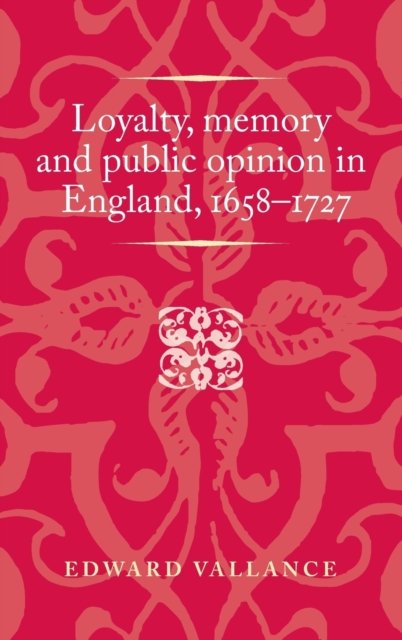
Loyalty, Memory and Public Opinion in England, 1658–1727
Av Edward Vallance, 2019.Del av serien Politics, Culture and Society in Early Modern Britain.
This book makes an important contribution to the ongoing debate over the emergence of an early modern 'public sphere'. Focusing on the petition-like form of the loyal address, it argues that these texts helped to foster a politically aware public by mapping shifts in the national 'mood'.
Språk: Engelsk
Ikke tilgjengelig for Klikk&Hent
Midlertidig tomt på lager
Bestillingsvare. Forventes sendt om ca 8 dager
Oppdag mer
Loyalty, Memory and Public Opinion in England, 1658–1727
Av Edward Vallance, 2019.Del av serien Politics, Culture and Society in Early Modern Britain.
This book makes an important contribution to the ongoing debate over the emergence of an early modern 'public sphere'. Focusing on the petition-like form of the loyal address, it argues that these texts helped to foster a politically aware public by mapping shifts in the national 'mood'.
Oppdag mer
Språk: Engelsk
Ikke tilgjengelig for Klikk&Hent
Midlertidig tomt på lager
Bestillingsvare. Forventes sendt om ca 8 dager
Ved å fullføre kjøpet aksepterer du kjøpsvilkårene.