Positioning Gender in Discourse
Av J. Baxter, 2003.
A Feminist Methodology
Positioning Gender in Discourse: A Feminist Methodology introduces a newly emerging approach to the analysis of talk. Feminist Poststructuralist Discourse Analysis (FPDA) offers a means of analyzing the ways in which speakers construct their gendered identities within a complex web of power relations. The FPDA approach challenges the traditional feminist view that females are often disempowered within mixed-sex settings. The FPDA approach to analyzing talk shows that both male and female speakers constantly shift between positions of powerfulness and powerlessness--even within the same conversation. The methodology is demonstrated through a study of teenagers' conversations in class and a study of senior managers' discussions in business meetings, concluding with suggestions that while female speakers are often "silenced" by dominant social discourses, they are far from being uniformly powerless.
Språk: Engelsk
Ikke tilgjengelig for Klikk&Hent
Midlertidig tomt på lager
Bestillingsvare. Forventes sendt om ca 20 dager
Oppdag mer
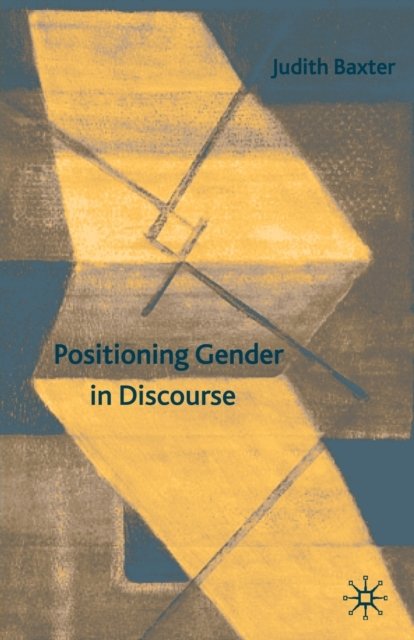
Positioning Gender in Discourse
Av J. Baxter, 2003.
A Feminist Methodology
Positioning Gender in Discourse: A Feminist Methodology introduces a newly emerging approach to the analysis of talk. Feminist Poststructuralist Discourse Analysis (FPDA) offers a means of analyzing the ways in which speakers construct their gendered identities within a complex web of power relations. The FPDA approach challenges the traditional feminist view that females are often disempowered within mixed-sex settings. The FPDA approach to analyzing talk shows that both male and female speakers constantly shift between positions of powerfulness and powerlessness--even within the same conversation. The methodology is demonstrated through a study of teenagers' conversations in class and a study of senior managers' discussions in business meetings, concluding with suggestions that while female speakers are often "silenced" by dominant social discourses, they are far from being uniformly powerless.
Oppdag mer
Språk: Engelsk
Ikke tilgjengelig for Klikk&Hent
Midlertidig tomt på lager
Bestillingsvare. Forventes sendt om ca 20 dager
Ved å fullføre kjøpet aksepterer du kjøpsvilkårene.