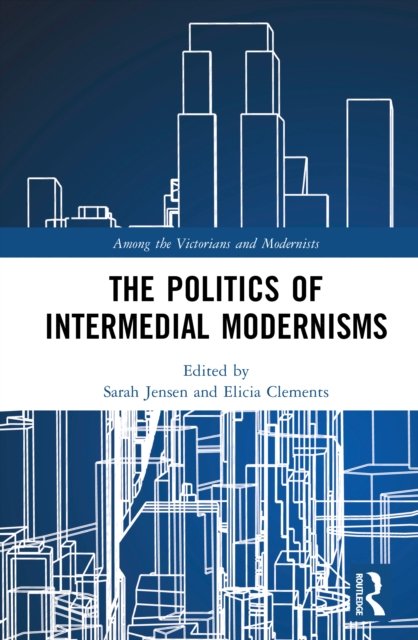
The Politics of Intermedial Modernisms
Redigert av Elicia Clements, Sarah Jensen, 2026.Del av serien Among the Victorians and Modernists.
The Politics of Intermedial Modernisms challenges current conceptions of both modernist and intermedial studies by investigating the media practices of marginalized artists and networks in and beyond the time period (c. 1890 to 1950). This edited collection of essays asks three key questions: How does intermediality shape our understanding of modernism? How does modernism continue to shape our understanding of intermedia? What are the political stakes of engaging with materials intermedially? Taken together, the essays in this interdisciplinary collection demonstrate that intermediality can be a fundamental condition and a critical method. The collection focuses on literature, art history, drama, music, and media archaeology. It explores artists and coalitions that are often overlooked in approaches from a single discipline, method, or location to shift attention away from historical definitional debates about modernism and intermediality and enable the emergence of diverse voices and creative practices. Contributions to this collection highlight the political engagements of intermedial artists to address a lack of socio-political analysis in intermedial studies, especially in cultural “high” modernism. The interdisciplinary scope of this book invites a broad audience of undergraduate and postgraduate students as well as academics teaching and researching in twentieth-century visual, literary, and sound cultures, media studies, and performance studies to examine fresh perspectiveson intermedial modernisms.
Ikke tilgjengelig for Klikk&Hent
Forhåndsbestill
Forventes i salg 07.08.2026
The Politics of Intermedial Modernisms
Redigert av Elicia Clements, Sarah Jensen, 2026.Del av serien Among the Victorians and Modernists.
The Politics of Intermedial Modernisms challenges current conceptions of both modernist and intermedial studies by investigating the media practices of marginalized artists and networks in and beyond the time period (c. 1890 to 1950). This edited collection of essays asks three key questions: How does intermediality shape our understanding of modernism? How does modernism continue to shape our understanding of intermedia? What are the political stakes of engaging with materials intermedially? Taken together, the essays in this interdisciplinary collection demonstrate that intermediality can be a fundamental condition and a critical method. The collection focuses on literature, art history, drama, music, and media archaeology. It explores artists and coalitions that are often overlooked in approaches from a single discipline, method, or location to shift attention away from historical definitional debates about modernism and intermediality and enable the emergence of diverse voices and creative practices. Contributions to this collection highlight the political engagements of intermedial artists to address a lack of socio-political analysis in intermedial studies, especially in cultural “high” modernism. The interdisciplinary scope of this book invites a broad audience of undergraduate and postgraduate students as well as academics teaching and researching in twentieth-century visual, literary, and sound cultures, media studies, and performance studies to examine fresh perspectiveson intermedial modernisms.
Ikke tilgjengelig for Klikk&Hent
Forhåndsbestill
Forventes i salg 07.08.2026
Ved å fullføre kjøpet aksepterer du kjøpsvilkårene.