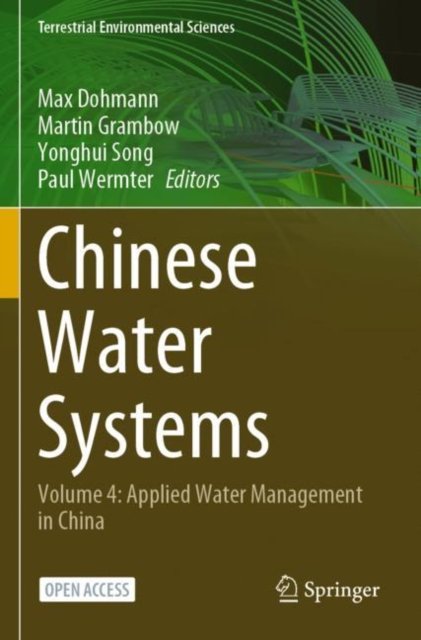
Chinese Water Systems
Redigert av Martin Grambow, Yonghui Song, Paul Wermter, Max Dohmann, 2021.Del av serien Terrestrial Environmental Sciences.
Volume 4: Applied Water Management in China
1.Improving water management and the water management system in the Liao river basin and Lake Di1.1Structural Indicators1.1.1Development of innovative 3D Water Governance Models for Kunming City and Bavaria1.1.1.1Introduction1.1.1.2Materials and methods1.1.1.3Results1.1.1.4Discussion1.1.2Water Governance Structural Characteristics of Kunming City and Bavaria and Their Comparison1.1.2.1Introduction1.1.2.2Materials and methods1.1.2.3Results and discussion1.1.2.4Conclusion1.1.2.5References2.Ecological indicators for surface water quality - methodological approaches to fish community assessments in China and Germany2.1Introduction2.1.1The need for ecosystem health assessment2.1.2Current situation in China and Germany2.1.3Ecological indicators of ecosystem integrity2.1.4Biological river assessment approaches applied in China and Germany2.1.4.1China2.1.4.2Germany2.2Methodological comparison of fish community assessment2.2.1Methodology2.2.1.1Choice of sampling methods2.2.1.2Area of experimental investigation2.2.1.3Description of sampling methods and design2.2.1.4Calculated metrics2.2.2Results2.2.2.1Fish Community2.2.2.2Method efficiency2.3Discussion2.4References3.Dianchi Shallow Lake Management3.1Abstract3.2Introduction3.2.1Conceptual Thoughts connecting Water Management and Shallow Lake Management3.2.2Two studies for one goal3.3Study 1: Water and Sediment Monitoring Data Acquisition3.3.1Research Area3.3.2Materials and Methods3.3.2.1Sampling3.3.2.2Analytics3.3.3Results and Discussion3.3.3.1Analytics3.4Study 2: Shallow Lake Modelling of Lake Caohai3.4.1Theoretical Foundation and Adaptions3.4.2Data input and model parameterisation3.4.3Model simulation scenarios3.4.4Caohai Shallow Lake Model Results3.5Summary and Recommendations for the Dianchi Shallow Lake Management3.5.1Shallow lake management - a very special task3.5.2Necessity for highest Data Quality3.5.3Recommendations of most promising management scenario for the lake management3.6References3.7Annex3.7.1Annex 3-1 Full compares between aerobic and anoxic milie3.7.2Annex 3-2 Relevant parameters and variables of StoLaM used in the Lake Caohai simulation study4.New technical approaches for the co-processing of pharmaceutical wastewater in municipal wastewater treatment plants in the Shenyang region4.1Introduction4.2New approaches for the co-treatment of municipal and industrial wastewater4.2.1State of wastewater treatment and upgrading plan in China and Shenyang4.2.1.1Administrative structure and legal basis for wastewater treatment and water protection4.2.1.2Institutions, procedures and challenges4.2.1.3Environmental problem and state of wastewater treatment in Shenyang4.2.1.4Status of pharmaceutical waste water treatment in China and the pharmaceutical company "Northeast Pharmaceutical Group Co, Ltd. in Shenyang4.2.1.5Parallel research activities4.2.2Innovative membrane technology in waste water treatment and the pilot MBR-treatment facility in Shenyang4.2.2.1Membrane filtration in wastewater treatment4.2.2.2Experimental installation: design, construction and operation4.2.2.3Project progress and operational phases4.2.2.4Sampling, measurement methods and parameter determi
Språk: Engelsk
Ikke tilgjengelig for Klikk&Hent
Midlertidig tomt på lager
Bestillingsvare. Forventes sendt om ca 20 dager
Chinese Water Systems
Redigert av Martin Grambow, Yonghui Song, Paul Wermter, Max Dohmann, 2021.Del av serien Terrestrial Environmental Sciences.
Volume 4: Applied Water Management in China
1.Improving water management and the water management system in the Liao river basin and Lake Di1.1Structural Indicators1.1.1Development of innovative 3D Water Governance Models for Kunming City and Bavaria1.1.1.1Introduction1.1.1.2Materials and methods1.1.1.3Results1.1.1.4Discussion1.1.2Water Governance Structural Characteristics of Kunming City and Bavaria and Their Comparison1.1.2.1Introduction1.1.2.2Materials and methods1.1.2.3Results and discussion1.1.2.4Conclusion1.1.2.5References2.Ecological indicators for surface water quality - methodological approaches to fish community assessments in China and Germany2.1Introduction2.1.1The need for ecosystem health assessment2.1.2Current situation in China and Germany2.1.3Ecological indicators of ecosystem integrity2.1.4Biological river assessment approaches applied in China and Germany2.1.4.1China2.1.4.2Germany2.2Methodological comparison of fish community assessment2.2.1Methodology2.2.1.1Choice of sampling methods2.2.1.2Area of experimental investigation2.2.1.3Description of sampling methods and design2.2.1.4Calculated metrics2.2.2Results2.2.2.1Fish Community2.2.2.2Method efficiency2.3Discussion2.4References3.Dianchi Shallow Lake Management3.1Abstract3.2Introduction3.2.1Conceptual Thoughts connecting Water Management and Shallow Lake Management3.2.2Two studies for one goal3.3Study 1: Water and Sediment Monitoring Data Acquisition3.3.1Research Area3.3.2Materials and Methods3.3.2.1Sampling3.3.2.2Analytics3.3.3Results and Discussion3.3.3.1Analytics3.4Study 2: Shallow Lake Modelling of Lake Caohai3.4.1Theoretical Foundation and Adaptions3.4.2Data input and model parameterisation3.4.3Model simulation scenarios3.4.4Caohai Shallow Lake Model Results3.5Summary and Recommendations for the Dianchi Shallow Lake Management3.5.1Shallow lake management - a very special task3.5.2Necessity for highest Data Quality3.5.3Recommendations of most promising management scenario for the lake management3.6References3.7Annex3.7.1Annex 3-1 Full compares between aerobic and anoxic milie3.7.2Annex 3-2 Relevant parameters and variables of StoLaM used in the Lake Caohai simulation study4.New technical approaches for the co-processing of pharmaceutical wastewater in municipal wastewater treatment plants in the Shenyang region4.1Introduction4.2New approaches for the co-treatment of municipal and industrial wastewater4.2.1State of wastewater treatment and upgrading plan in China and Shenyang4.2.1.1Administrative structure and legal basis for wastewater treatment and water protection4.2.1.2Institutions, procedures and challenges4.2.1.3Environmental problem and state of wastewater treatment in Shenyang4.2.1.4Status of pharmaceutical waste water treatment in China and the pharmaceutical company "Northeast Pharmaceutical Group Co, Ltd. in Shenyang4.2.1.5Parallel research activities4.2.2Innovative membrane technology in waste water treatment and the pilot MBR-treatment facility in Shenyang4.2.2.1Membrane filtration in wastewater treatment4.2.2.2Experimental installation: design, construction and operation4.2.2.3Project progress and operational phases4.2.2.4Sampling, measurement methods and parameter determi
Språk: Engelsk
Ikke tilgjengelig for Klikk&Hent
Midlertidig tomt på lager
Bestillingsvare. Forventes sendt om ca 20 dager
Ved å fullføre kjøpet aksepterer du kjøpsvilkårene.