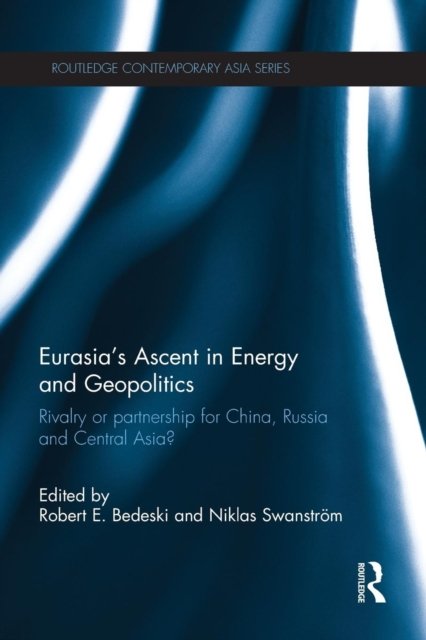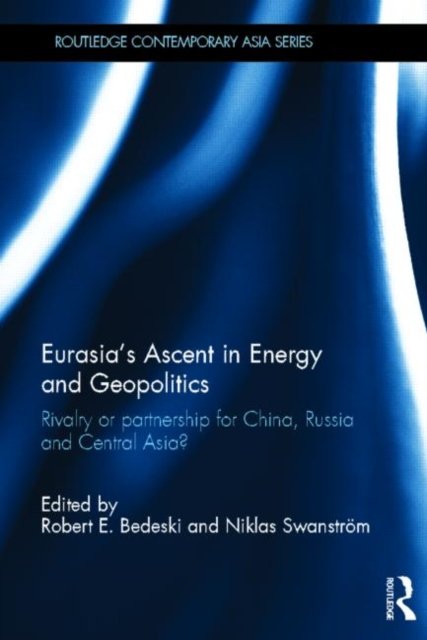
Eurasia's Ascent in Energy and Geopolitics
Niklas Swanstrom, Robert Bedeski
InnbundetEngelsk
Del av serien Routledge Contemporary Asia Series
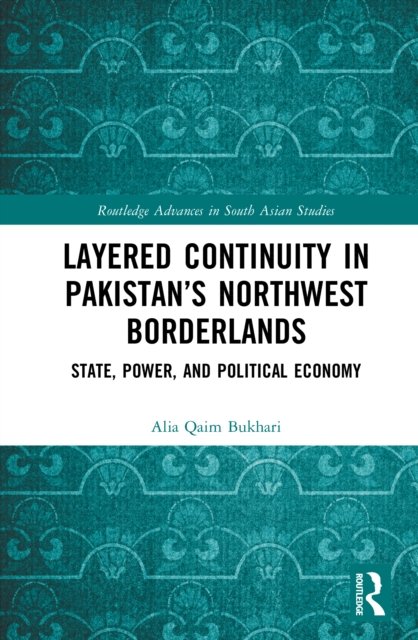
Av Alia Qaim Bukhari, 2026.Del av serien Routledge Advances in South Asian Studies.
State, Power, and Political Economy
This book offers a political economy account of Pakistan’s northwest borderlands, challenging rupture-based narratives of state absence, conflict, and integration. It advances the concept of layered continuity to capture the gradual process of how new rules, resources, and political openings are added onto older arrangements, producing a fragmented yet durable political order. Drawing on long-horizon archival research, sustained field interviews, policy documents, and electoral data, the book examines how development initiatives, administrative reforms, aid programmes, and political change in the former Federally Administered Tribal Areas (FATA) have accumulated over time rather than displaced existing arrangements. The chapters show how interventions frequently reinforce existing local logics even as they alter the forms, idioms, and channels through which state power is exercised, adding new layers to established arrangements rather than displacing them. Rather than treating development and reform as instruments of replacement or integration, the book shows how successive interventions are absorbed into locally recognisable repertoires of authority, entitlement, and negotiation. Key terms such as tribe, state, participation, corruption, and reform are not deployed as fixed explanatory labels but are examined as languages of practice: the vocabularies through which actors articulate claims, justify access, contest distribution, and negotiate legitimacy. By tracing how authority and development are negotiated over time, the study moves beyond exceptionalist or security- and conflict-centred readings of the borderlands. In doing so, it develops layered continuity as an analytically sharp framework for understanding authority, reform and political order in the borderlands, with relevance to scholars and debates within the fields of postcolonial governance, South Asian politics, and economic development.
Ikke tilgjengelig for Klikk&Hent
Forhåndsbestill
Forventes i salg 16.07.2026
Av Alia Qaim Bukhari, 2026.Del av serien Routledge Advances in South Asian Studies.
State, Power, and Political Economy
This book offers a political economy account of Pakistan’s northwest borderlands, challenging rupture-based narratives of state absence, conflict, and integration. It advances the concept of layered continuity to capture the gradual process of how new rules, resources, and political openings are added onto older arrangements, producing a fragmented yet durable political order. Drawing on long-horizon archival research, sustained field interviews, policy documents, and electoral data, the book examines how development initiatives, administrative reforms, aid programmes, and political change in the former Federally Administered Tribal Areas (FATA) have accumulated over time rather than displaced existing arrangements. The chapters show how interventions frequently reinforce existing local logics even as they alter the forms, idioms, and channels through which state power is exercised, adding new layers to established arrangements rather than displacing them. Rather than treating development and reform as instruments of replacement or integration, the book shows how successive interventions are absorbed into locally recognisable repertoires of authority, entitlement, and negotiation. Key terms such as tribe, state, participation, corruption, and reform are not deployed as fixed explanatory labels but are examined as languages of practice: the vocabularies through which actors articulate claims, justify access, contest distribution, and negotiate legitimacy. By tracing how authority and development are negotiated over time, the study moves beyond exceptionalist or security- and conflict-centred readings of the borderlands. In doing so, it develops layered continuity as an analytically sharp framework for understanding authority, reform and political order in the borderlands, with relevance to scholars and debates within the fields of postcolonial governance, South Asian politics, and economic development.
Ikke tilgjengelig for Klikk&Hent
Forhåndsbestill
Forventes i salg 16.07.2026
Ved å fullføre kjøpet aksepterer du kjøpsvilkårene.