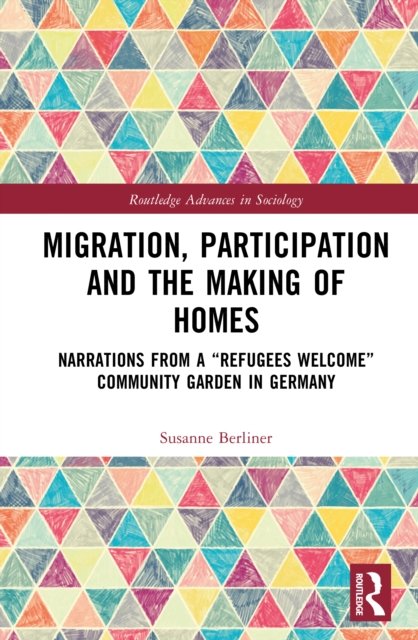
Migration, Participation and the Making of Homes
Av Susanne Berliner, 2025.Del av serien Routledge Advances in Sociology.
Narrations from a “Refugees Welcome” Community Garden in Germany
This book is an ethnographic inquiry into the complex socio-ecological relationalities in an inclusive, intercultural community garden in Germany, originally created as a "refugees welcome" project in 2015.
Ikke tilgjengelig for Klikk&Hent
Midlertidig tomt på lager
Bestillingsvare. Forventes sendt om ca 10 dager
Migration, Participation and the Making of Homes
Av Susanne Berliner, 2025.Del av serien Routledge Advances in Sociology.
Narrations from a “Refugees Welcome” Community Garden in Germany
This book is an ethnographic inquiry into the complex socio-ecological relationalities in an inclusive, intercultural community garden in Germany, originally created as a "refugees welcome" project in 2015.
Ikke tilgjengelig for Klikk&Hent
Midlertidig tomt på lager
Bestillingsvare. Forventes sendt om ca 10 dager
Ved å fullføre kjøpet aksepterer du kjøpsvilkårene.