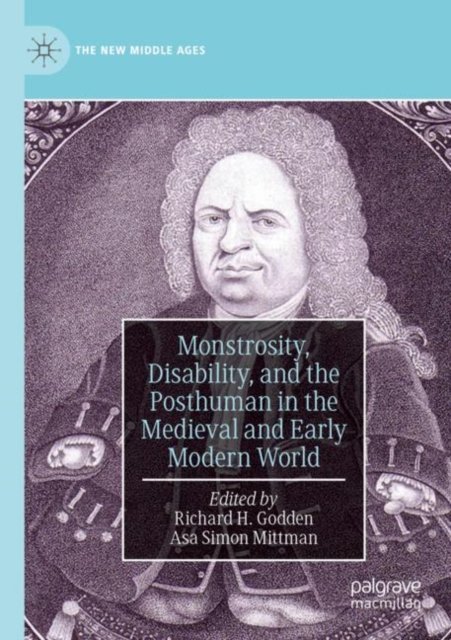
Monstrosity, Disability, and the Posthuman in the Medieval and Early Modern World
Redigert av Asa Simon Mittman, Richard H. Godden, 2020.Del av serien The New Middle Ages.
This collection examines the intersection of the discourses of ?disability? and ?monstrosity? in a timely and necessary intervention in the scholarly fields of Disability Studies and Monster Studies. Analyzing Medieval and Early Modern art and literature replete with images of non-normative bodies, these essays consider the pernicious history of defining people with distinctly non-normative bodies or non-normative cognition as monsters. In many cases throughout Western history, a figure marked by what Rosemarie Garland-Thomson has termed ?the extraordinary body? is labeled a ?monster.? This volume explores the origins of this conflation, examines the problems and possibilities inherent in it, and casts both disability and monstrosity in light of emergent, empowering discourses of posthumanism.
Språk: Engelsk
Ikke tilgjengelig for Klikk&Hent
Midlertidig tomt på lager
Bestillingsvare. Forventes sendt om ca 20 dager
Oppdag mer
Monstrosity, Disability, and the Posthuman in the Medieval and Early Modern World
Redigert av Asa Simon Mittman, Richard H. Godden, 2020.Del av serien The New Middle Ages.
This collection examines the intersection of the discourses of ?disability? and ?monstrosity? in a timely and necessary intervention in the scholarly fields of Disability Studies and Monster Studies. Analyzing Medieval and Early Modern art and literature replete with images of non-normative bodies, these essays consider the pernicious history of defining people with distinctly non-normative bodies or non-normative cognition as monsters. In many cases throughout Western history, a figure marked by what Rosemarie Garland-Thomson has termed ?the extraordinary body? is labeled a ?monster.? This volume explores the origins of this conflation, examines the problems and possibilities inherent in it, and casts both disability and monstrosity in light of emergent, empowering discourses of posthumanism.
Oppdag mer
Språk: Engelsk
Ikke tilgjengelig for Klikk&Hent
Midlertidig tomt på lager
Bestillingsvare. Forventes sendt om ca 20 dager
Ved å fullføre kjøpet aksepterer du kjøpsvilkårene.