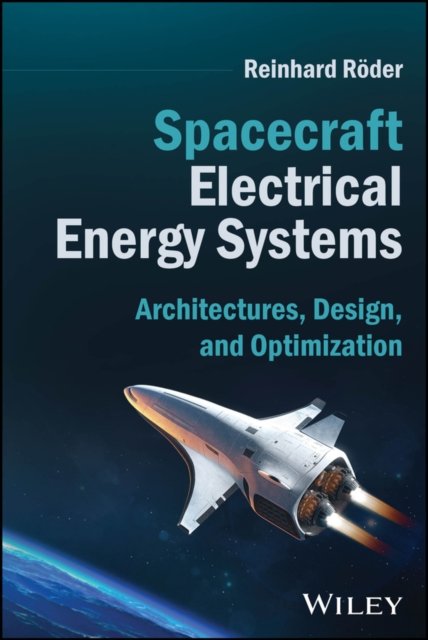
Spacecraft Electrical Energy Systems
Av Reinhard Roder, 2026.
Architectures, Design, and Optimization
Top-down approach to EPS architecture for spacecraft electrical power systems Filling a gap in the existing literature, Spacecraft Electrical Energy Systems guides readers through the design and development of Electrical Power Systems (EPS) for spacecraft using a top-down approach. The book opens by introducing the function of EPS for spacecraft and giving an overview of the different types of EPS technologies available. It then takes readers through the detailed design and development parameters for EPS, with a focus on requirements and standards from the ECSS and NASA, enabling readers to make more informed decisions as they work on real-world spacecraft projects. It explains the functionality of all common types of spacecraft power bus technologies and compares their advantages and disadvantages. Spacecraft Electrical Energy Systems also discusses: Methods of generation of electrical power and energy, covering photovoltaics, solar dynamics, nuclear power, radioisotope thermal generation, and regenerative fuel cellsSpecific EPS design constraints, including compilation and management of the system power budget and power and energy marginsSolar cell types for space flight, including silicon, gallium arsenide, multiple junction, thin film, indium phosphide, and tandemEnvironmental loads on solar arrays in space, covering thermal cycles, stress on cell interconnectors, debris and micrometeoroids, particle flux, and radiationLithium-based energy storage, covering lithium-ion, lithium-ion-polymer, solid-state lithium-ion, and lithium-sulfur Spacecraft Electrical Energy Systems delivers important cutting-edge knowledge for professional aerospace engineers, as well as electrical engineers working within the space industry and early-career engineers who are new to the field. The book can also be used by students and instructors in graduate-level specialty courses.
Ved å fullføre kjøpet aksepterer jeg kjøpsvilkårene.
Ikke tilgjengelig for Klikk&Hent
På nettlager. Forsinket leveringstid.
Spacecraft Electrical Energy Systems
Av Reinhard Roder, 2026.
Architectures, Design, and Optimization
Top-down approach to EPS architecture for spacecraft electrical power systems Filling a gap in the existing literature, Spacecraft Electrical Energy Systems guides readers through the design and development of Electrical Power Systems (EPS) for spacecraft using a top-down approach. The book opens by introducing the function of EPS for spacecraft and giving an overview of the different types of EPS technologies available. It then takes readers through the detailed design and development parameters for EPS, with a focus on requirements and standards from the ECSS and NASA, enabling readers to make more informed decisions as they work on real-world spacecraft projects. It explains the functionality of all common types of spacecraft power bus technologies and compares their advantages and disadvantages. Spacecraft Electrical Energy Systems also discusses: Methods of generation of electrical power and energy, covering photovoltaics, solar dynamics, nuclear power, radioisotope thermal generation, and regenerative fuel cellsSpecific EPS design constraints, including compilation and management of the system power budget and power and energy marginsSolar cell types for space flight, including silicon, gallium arsenide, multiple junction, thin film, indium phosphide, and tandemEnvironmental loads on solar arrays in space, covering thermal cycles, stress on cell interconnectors, debris and micrometeoroids, particle flux, and radiationLithium-based energy storage, covering lithium-ion, lithium-ion-polymer, solid-state lithium-ion, and lithium-sulfur Spacecraft Electrical Energy Systems delivers important cutting-edge knowledge for professional aerospace engineers, as well as electrical engineers working within the space industry and early-career engineers who are new to the field. The book can also be used by students and instructors in graduate-level specialty courses.
Ved å fullføre kjøpet aksepterer jeg kjøpsvilkårene.
Ikke tilgjengelig for Klikk&Hent
På nettlager. Forsinket leveringstid.
Ved å fullføre kjøpet aksepterer du kjøpsvilkårene.