
Hopp til hovedinnholdet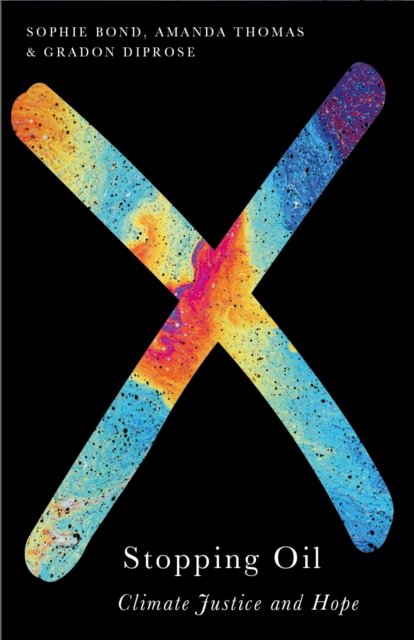







Stopping Oil
Av Amanda Thomas, Sophie Bond, Gradon Diprose, 2023.Del av serien Radical Geography.
Climate Justice and Hope
Stopping Oil dives into the story of how deep-sea oil exploration became politicised in Aotearoa New Zealand, how community groups mobilised against it and the backlash that followed. It is also a story of activists exercising an ethic of care and responsibility, and how that solidarity was masked and silenced by the neoliberal state. As Aotearoa New Zealand began to pursue deep-sea oil as part of its development agenda, a powerful climate justice campaign emerged, comprising of a range of autonomous 'Oil Free' groups around the country, NGOs like Greenpeace, and iwi and hapu (Maori tribal groups). As their influence increased, the state employed different tactics to silence them, starting with media representations designed to delegitimise, followed by securitisation and surveillance that controlled their activities, and finally targeted state-sanctioned violence and dehumanisation. By highlighting geographies of hope for radical progressive change, the authors focus on the many examples of the campaign where solidarity and political responsibility shone through the repression, leading us towards a brighter future for climate justice across the globe.
PocketEngelsk
299,-
Ved å fullføre kjøpet aksepterer jeg kjøpsvilkårene.
Ikke tilgjengelig for Klikk&Hent
På nettlager. Bestilles fra England. Leveres normalt innen 5-8 virkedager.
Stopping Oil
Av Amanda Thomas, Sophie Bond, Gradon Diprose, 2023.Del av serien Radical Geography.
Climate Justice and Hope
Stopping Oil dives into the story of how deep-sea oil exploration became politicised in Aotearoa New Zealand, how community groups mobilised against it and the backlash that followed. It is also a story of activists exercising an ethic of care and responsibility, and how that solidarity was masked and silenced by the neoliberal state. As Aotearoa New Zealand began to pursue deep-sea oil as part of its development agenda, a powerful climate justice campaign emerged, comprising of a range of autonomous 'Oil Free' groups around the country, NGOs like Greenpeace, and iwi and hapu (Maori tribal groups). As their influence increased, the state employed different tactics to silence them, starting with media representations designed to delegitimise, followed by securitisation and surveillance that controlled their activities, and finally targeted state-sanctioned violence and dehumanisation. By highlighting geographies of hope for radical progressive change, the authors focus on the many examples of the campaign where solidarity and political responsibility shone through the repression, leading us towards a brighter future for climate justice across the globe.
299,-
PocketEngelsk
Ved å fullføre kjøpet aksepterer jeg kjøpsvilkårene.
Ikke tilgjengelig for Klikk&Hent
På nettlager. Bestilles fra England. Leveres normalt innen 5-8 virkedager.
299,-
Ved å fullføre kjøpet aksepterer du kjøpsvilkårene.
Populært i samme kategori
The Youth Climate Uprising
David Fopp, Loukina Tille og 1 annen
PocketEngelsk
Del av serien X-Texts on Culture and Society


Beyond Prime Time Activism
Charlotte Ryan, Karen Jeffreys
PocketEngelsk
Del av serien Media and Communication Activism
Flere bøker av forfatter



Compact Preliminary for Schools Student's Book without Answers with Online Practice
Amanda Thomas, Sue Elliott
SamlesettEngelsk
Del av serien Compact
Fly High Level 4 Activity Book and CD ROM Pack
Amanda Thomas, Jeanne Perrett og 1 annen
SamlesettEngelsk
Del av serien Fly High
Flere bøker i serien
Geographies of Digital Exclusion
Mark Graham, Martin Dittus
PocketEngelsk
Del av serien Radical Geography
Society Despite the State
Anthony Ince, Geronimo Barrera de la Torre
PocketEngelsk
Del av serien Radical Geography
