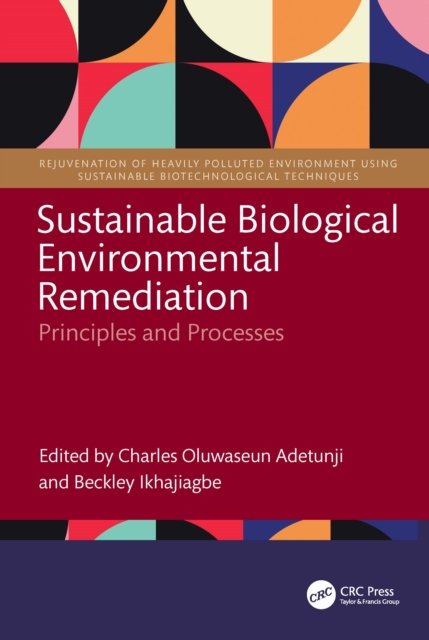
Sustainable Biological Environmental Remediation
Redigert av Beckley Ikhajiagbe, Charles Oluwaseun Adetunji, 2026.Del av serien Rejuvenation of Heavily Polluted Environment Using Sustainable Biotechnological Techniques.
Principles and Processes
This book addresses emerging technologies for the sustainable remediation of polluted environments, guided by the Sustainable Development Goals (SDGs). It explores contaminated land management practices, environmental risk assessment approaches, optimization techniques, and procedures used in environmental bio-reclamation. The book also examines genetic strategies to enhance bioremediation, the role of the green economy in promoting sustainable resource use, and methods for reducing carbon footprints. Additionally, it discusses policy and legal framework challenges associated with long-term remedial efforts. Features:Covers multiple aspects of sustainable biological environmental remediation technologiesPromotes sustainable remediation using sustainability markers and best practicesExamines environmental risk assessment methodologies as inputs for guiding long-term site reclamationDiscusses current trends in biomonitoring and bioassessment research for sustainable environmental managementExplains gene–environment interactions in the context of bioremediationThis book is intended for graduate students and researchers in environmental sciences, engineering, biotechnology, and bioremediation.
Ikke tilgjengelig for Klikk&Hent
Forhåndsbestill
Forventes i salg 22.10.2026
Oppdag mer
Sustainable Biological Environmental Remediation
Redigert av Beckley Ikhajiagbe, Charles Oluwaseun Adetunji, 2026.Del av serien Rejuvenation of Heavily Polluted Environment Using Sustainable Biotechnological Techniques.
Principles and Processes
This book addresses emerging technologies for the sustainable remediation of polluted environments, guided by the Sustainable Development Goals (SDGs). It explores contaminated land management practices, environmental risk assessment approaches, optimization techniques, and procedures used in environmental bio-reclamation. The book also examines genetic strategies to enhance bioremediation, the role of the green economy in promoting sustainable resource use, and methods for reducing carbon footprints. Additionally, it discusses policy and legal framework challenges associated with long-term remedial efforts. Features:Covers multiple aspects of sustainable biological environmental remediation technologiesPromotes sustainable remediation using sustainability markers and best practicesExamines environmental risk assessment methodologies as inputs for guiding long-term site reclamationDiscusses current trends in biomonitoring and bioassessment research for sustainable environmental managementExplains gene–environment interactions in the context of bioremediationThis book is intended for graduate students and researchers in environmental sciences, engineering, biotechnology, and bioremediation.
Oppdag mer
Ikke tilgjengelig for Klikk&Hent
Forhåndsbestill
Forventes i salg 22.10.2026
Ved å fullføre kjøpet aksepterer du kjøpsvilkårene.