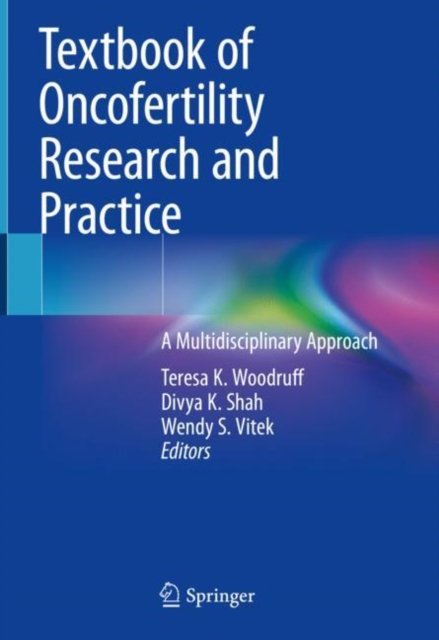
Textbook of Oncofertility Research and Practice
Redigert av Divya K. Shah, Wendy S. Vitek, Teresa K. Woodruff, 2019.
A Multidisciplinary Approach
This textbook will be a unified, comprehensive source for oncofertility research and medical practice that is authoritative and up-to-date. Dr. Teresa Woodruff, who coined the term in 2006, is an internationally recognized leader in the field of oncofertility who has published a number of books with Springer on various aspects of this important topic, both basic science and clinical practice.
It will serve as the primary oncofertility reference for the various medical disciplines that must be coordinated to provide care for young cancer patients, including reproductive endocrinology, pediatric endocrinology, adult and pediatric oncology, adult and pediatric urology, breast surgery, radiation oncology and allied professions where iatrogenic treatments or genetic conditions result in infertility.
The book will be organized around the major themes of the discipline and will include the current research, clinical practice, emerging technologies and future directions. It will be divided into six thematic sections, listed here with some examples of topics covered:
- Advances in basic science and research: Bioengineering, tissue cryopreservation, uterine transplantation
- Current medical practice guidelines: Male and female fertility preservation, embryo/oocyte banking, setting up an oncofertility program
- Pediatric applications: Assessing ovarian/testicular reserve, fertility risks for children and adolescents
- Ethics, humanities and legal implications: Bioethics, disclosure, adoption
- Communication and education strategies: Counseling and consent, family dynamics, insurance considerations
- Relevant non-oncologic conditions: Cancer genetics, gender dysphoria, disorders of sexual development
In each chapter, 3-4 bulleted key learning points and review study questions will bookend the text. A seventh section, comprised exclusively of clinical case studies illustrating the management of both oncologic and non-oncologic conditions, will add to the pedagogical value of the text.
Though the content included will be applicable to all professionals in the fields mentioned above, the primary market will be residents and fellows moving into any one of those fields who see patients in the oncofertility space but for whom no formal didactics are offered.
Ikke tilgjengelig for Klikk&Hent
Midlertidig tomt på lager
Bestillingsvare. Forventes sendt om ca 20 dager
Textbook of Oncofertility Research and Practice
Redigert av Divya K. Shah, Wendy S. Vitek, Teresa K. Woodruff, 2019.
A Multidisciplinary Approach
This textbook will be a unified, comprehensive source for oncofertility research and medical practice that is authoritative and up-to-date. Dr. Teresa Woodruff, who coined the term in 2006, is an internationally recognized leader in the field of oncofertility who has published a number of books with Springer on various aspects of this important topic, both basic science and clinical practice.
It will serve as the primary oncofertility reference for the various medical disciplines that must be coordinated to provide care for young cancer patients, including reproductive endocrinology, pediatric endocrinology, adult and pediatric oncology, adult and pediatric urology, breast surgery, radiation oncology and allied professions where iatrogenic treatments or genetic conditions result in infertility.
The book will be organized around the major themes of the discipline and will include the current research, clinical practice, emerging technologies and future directions. It will be divided into six thematic sections, listed here with some examples of topics covered:
- Advances in basic science and research: Bioengineering, tissue cryopreservation, uterine transplantation
- Current medical practice guidelines: Male and female fertility preservation, embryo/oocyte banking, setting up an oncofertility program
- Pediatric applications: Assessing ovarian/testicular reserve, fertility risks for children and adolescents
- Ethics, humanities and legal implications: Bioethics, disclosure, adoption
- Communication and education strategies: Counseling and consent, family dynamics, insurance considerations
- Relevant non-oncologic conditions: Cancer genetics, gender dysphoria, disorders of sexual development
In each chapter, 3-4 bulleted key learning points and review study questions will bookend the text. A seventh section, comprised exclusively of clinical case studies illustrating the management of both oncologic and non-oncologic conditions, will add to the pedagogical value of the text.
Though the content included will be applicable to all professionals in the fields mentioned above, the primary market will be residents and fellows moving into any one of those fields who see patients in the oncofertility space but for whom no formal didactics are offered.
Ikke tilgjengelig for Klikk&Hent
Midlertidig tomt på lager
Bestillingsvare. Forventes sendt om ca 20 dager
Ved å fullføre kjøpet aksepterer du kjøpsvilkårene.