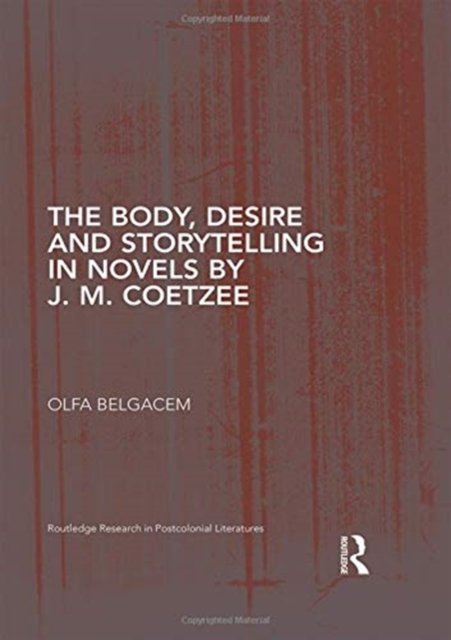
The Body, Desire and Storytelling in Novels by J. M. Coetzee
Av Olfa Belgacem, 2018.Del av serien Routledge Research in Postcolonial Literatures.
Asserting that Coetzee?s representation of the body as subject to dismemberment counters the colonial representation of the other?s body as exotic and erotically-charged, this study inspects the ambivalence pertaining to Coetzee?s embodied representation of the other and reveals the risks that come with such contrapuntal reiteration. Through the study of the narrative identity of the colonial other and her/his body?s representation, the book also unveils the author?s own authorial identity exposed through the repetitive narrative patterns and characterization choices.
Språk: Engelsk
Ikke tilgjengelig for Klikk&Hent
Midlertidig tomt på lager
Bestillingsvare. Forventes sendt om ca 10 dager
The Body, Desire and Storytelling in Novels by J. M. Coetzee
Av Olfa Belgacem, 2018.Del av serien Routledge Research in Postcolonial Literatures.
Asserting that Coetzee?s representation of the body as subject to dismemberment counters the colonial representation of the other?s body as exotic and erotically-charged, this study inspects the ambivalence pertaining to Coetzee?s embodied representation of the other and reveals the risks that come with such contrapuntal reiteration. Through the study of the narrative identity of the colonial other and her/his body?s representation, the book also unveils the author?s own authorial identity exposed through the repetitive narrative patterns and characterization choices.
Språk: Engelsk
Ikke tilgjengelig for Klikk&Hent
Midlertidig tomt på lager
Bestillingsvare. Forventes sendt om ca 10 dager
Ved å fullføre kjøpet aksepterer du kjøpsvilkårene.