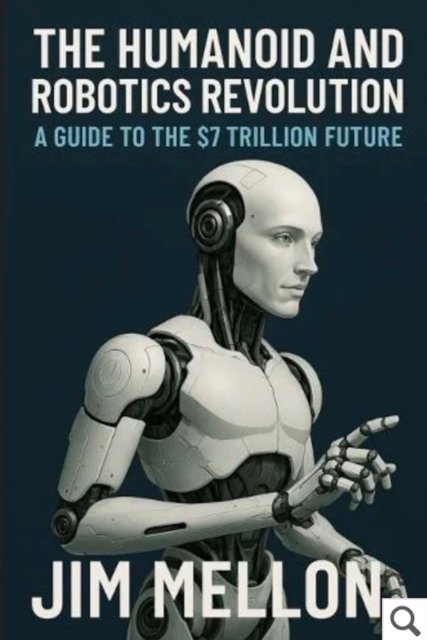
The Humanoid and Robotics Revolution
Av Jim Mellon, 2025.
A Guide to the $7 Trillion Future
While muchof the current excitement around artificial intelligence is focused on softwareand data, robotics is quietly emerging as one of its most transformative – and underestimated– beneficiaries. The fusion of advancedmechanical engineering with AI is enabling robots of all shapes and sizes tobecome genuinely mobile, and capable of performing a vast array of repetitivetasks traditionally carried out by humans. From croppicking and security to elderly care, delivery services, domestic chores and evenmedical procedures, robots are rapidly becoming indispensable across numerous sectors. They offer a compelling value proposition:they work tirelessly, 24/7, without complaint, are non-unionised, and aresignificantly more cost-effective than their human counterparts. It is nosurprise, then, that Citibank projects robotics to become a multi-trillion-dollarindustry by 2050, even suggesting that robots may outnumber humans on theplanet within a few short years. This isnot merely a trend – it represents a profound shift in how we approach labour,productivity the future of work. In mylong investment career, few sectors have matched the sheer potential andexcitement that robotics now presents.
Ikke tilgjengelig for Klikk&Hent
Midlertidig tomt på lager
Bestillingsvare. Forventes sendt om ca 18 dager
The Humanoid and Robotics Revolution
Av Jim Mellon, 2025.
A Guide to the $7 Trillion Future
While muchof the current excitement around artificial intelligence is focused on softwareand data, robotics is quietly emerging as one of its most transformative – and underestimated– beneficiaries. The fusion of advancedmechanical engineering with AI is enabling robots of all shapes and sizes tobecome genuinely mobile, and capable of performing a vast array of repetitivetasks traditionally carried out by humans. From croppicking and security to elderly care, delivery services, domestic chores and evenmedical procedures, robots are rapidly becoming indispensable across numerous sectors. They offer a compelling value proposition:they work tirelessly, 24/7, without complaint, are non-unionised, and aresignificantly more cost-effective than their human counterparts. It is nosurprise, then, that Citibank projects robotics to become a multi-trillion-dollarindustry by 2050, even suggesting that robots may outnumber humans on theplanet within a few short years. This isnot merely a trend – it represents a profound shift in how we approach labour,productivity the future of work. In mylong investment career, few sectors have matched the sheer potential andexcitement that robotics now presents.
Ikke tilgjengelig for Klikk&Hent
Midlertidig tomt på lager
Bestillingsvare. Forventes sendt om ca 18 dager
Ved å fullføre kjøpet aksepterer du kjøpsvilkårene.