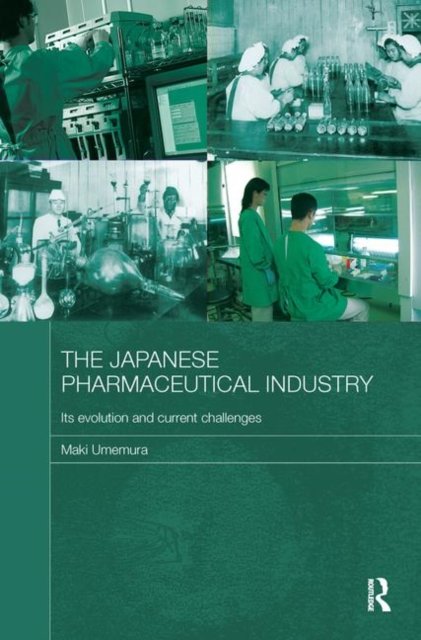
The Japanese Pharmaceutical Industry
Av Maki Umemura, 2011.Del av serien Routledge Studies in the Growth Economies of Asia.
Its Evolution and Current Challenges
This book explores why Japan, despite being a world leader in many high technology industries such as automobiles and consumer electronics, is only a minor player in the global pharmaceutical industry. Japan provides a huge market for pharmaceuticals as the second largest consumer of prescription drugs after the United States, and is a massive importer of prescription drugs, relying on discoveries made elsewhere. This book charts the development of the industry, from the devastation resulting from the Second World War to its performance in the present day. Focusing in particular on antibiotics and anticancer drugs, the book analyses factors that have prevented Japan from leading the rapid advances in science and technology that have occurred globally over recent decades. Looking at the pharmaceutical industry, the book argues that the Japanese government’s research and development policies were not sufficiently incentivising. It also shows how the nature of capitalism in Japan - which featured close relations between government and industry as well as between and within firms - was appropriate for nurturing industrial development in the immediate post-war decades, but became much less effective in later years.
Språk: Engelsk
Ikke tilgjengelig for Klikk&Hent
Midlertidig tomt på lager
Bestillingsvare. Forventes sendt om ca 9 dager
The Japanese Pharmaceutical Industry
Av Maki Umemura, 2011.Del av serien Routledge Studies in the Growth Economies of Asia.
Its Evolution and Current Challenges
This book explores why Japan, despite being a world leader in many high technology industries such as automobiles and consumer electronics, is only a minor player in the global pharmaceutical industry. Japan provides a huge market for pharmaceuticals as the second largest consumer of prescription drugs after the United States, and is a massive importer of prescription drugs, relying on discoveries made elsewhere. This book charts the development of the industry, from the devastation resulting from the Second World War to its performance in the present day. Focusing in particular on antibiotics and anticancer drugs, the book analyses factors that have prevented Japan from leading the rapid advances in science and technology that have occurred globally over recent decades. Looking at the pharmaceutical industry, the book argues that the Japanese government’s research and development policies were not sufficiently incentivising. It also shows how the nature of capitalism in Japan - which featured close relations between government and industry as well as between and within firms - was appropriate for nurturing industrial development in the immediate post-war decades, but became much less effective in later years.
Språk: Engelsk
Ikke tilgjengelig for Klikk&Hent
Midlertidig tomt på lager
Bestillingsvare. Forventes sendt om ca 9 dager
Ved å fullføre kjøpet aksepterer du kjøpsvilkårene.
Populært i samme kategori






Sapiens - en kort historie om menneskeheten




Flere bøker i serien


China's Iron Ore Boom