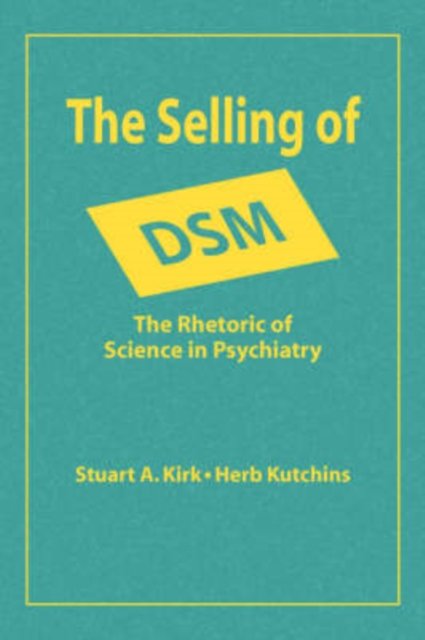
The Selling of DSM
Av Stuart A. Kirk, 1992.Del av serien Social Problems & Social Issues.
The Rhetoric of Science in Psychiatry
When it was first published in 1980, the Diagnostic and Statistical Manual of Mental Disorders, Third Edition-univer-sally known as DSM-III-embodied a radical new method for identifying psychiatric illness
Ikke tilgjengelig for Klikk&Hent
Midlertidig tomt på lager
Bestillingsvare. Forventes sendt om ca 10 dager
Oppdag mer
The Selling of DSM
Av Stuart A. Kirk, 1992.Del av serien Social Problems & Social Issues.
The Rhetoric of Science in Psychiatry
When it was first published in 1980, the Diagnostic and Statistical Manual of Mental Disorders, Third Edition-univer-sally known as DSM-III-embodied a radical new method for identifying psychiatric illness
Oppdag mer
Ikke tilgjengelig for Klikk&Hent
Midlertidig tomt på lager
Bestillingsvare. Forventes sendt om ca 10 dager
Ved å fullføre kjøpet aksepterer du kjøpsvilkårene.