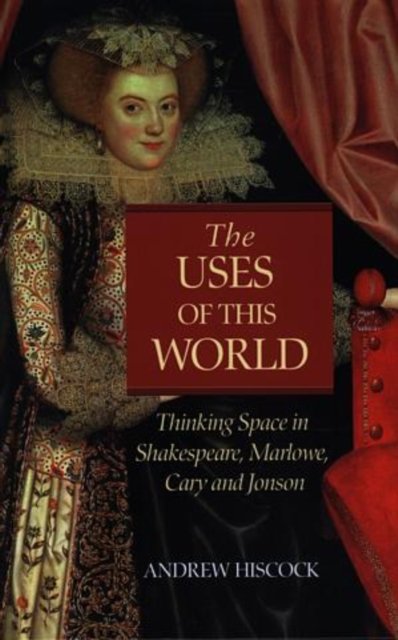
The Uses of this World
Av Andrew Hiscock, 2004.
Thinking Space in Shakespeare, Marlowe, Cary and Jonson
Issues of cultural space in early modern theater texts are addressed in this critical study. Explored are the fundamental changes in the social and philosophical organizations of space during this period and the ways in which theater dramatized them. The argument is made that Renaissance drama integrates models of social organization and spatial boundaries defined by property relations, economic hierarchies, historical customs, and kinship ties. The concept that space is not a neutral, fixed, and passive container, but instead a socially constructed process is demonstrated through analysis of such plays as Antony and Cleopatra, Hamlet, and The Winter's Tale.
Ikke tilgjengelig for Klikk&Hent
Midlertidig tomt på lager
Bestillingsvare. Forventes sendt om ca 11 dager
The Uses of this World
Av Andrew Hiscock, 2004.
Thinking Space in Shakespeare, Marlowe, Cary and Jonson
Issues of cultural space in early modern theater texts are addressed in this critical study. Explored are the fundamental changes in the social and philosophical organizations of space during this period and the ways in which theater dramatized them. The argument is made that Renaissance drama integrates models of social organization and spatial boundaries defined by property relations, economic hierarchies, historical customs, and kinship ties. The concept that space is not a neutral, fixed, and passive container, but instead a socially constructed process is demonstrated through analysis of such plays as Antony and Cleopatra, Hamlet, and The Winter's Tale.
Ikke tilgjengelig for Klikk&Hent
Midlertidig tomt på lager
Bestillingsvare. Forventes sendt om ca 11 dager
Ved å fullføre kjøpet aksepterer du kjøpsvilkårene.