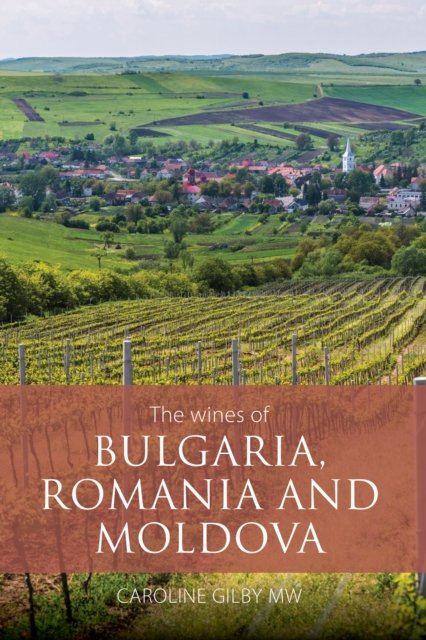
The wines of Bulgaria, Romania and Moldova
Av Caroline, MW Gilby, 2018.
Eastern Europe is still largely undiscoveredin western markets but is a source of fascinating, unique and authentic winestyles based on long-established history. This is the first in-depth bookdevoted to the region’s most important wine-producing countries, in all ofwhich wine is a major employer and driver of economic progress (at one time, 25%of Moldovian workers were involved in wine production). While there isconsiderable overlap between the countries in geology and climate the three havedistinctive wine industries, driven by differences in language, culture,politics, grape varieties and preferred wine styles.
The fall of the IronCurtain, and subsequent independence, marked the beginning of a new era forwine in all three countries. The transformation from a mass-market, commodityproduction model to higher quality, individual producers and estates, andincreasing emphasis on regional identities has been dramatic.
Gilby providesdetailed information on the history of wine production as well as the climateand geography that help shape the wines, and analyses the parts played byculture and politics in the development of these wine industries. For eachcountry, Gilby supplies details on key wine styles and important grapevarieties and adds a human interest angle by speaking to those involved in productionand highlighting wineries to look out for. The book also features a glossaryand statistical Appendices.
The wines of Bulgaria, Romania and Moldova willexcite wine enthusiasts keen on discovering previously untasted varieties, traditionalstyles and new wines.
Ikke tilgjengelig for Klikk&Hent
Utsolgt på nettlager
The wines of Bulgaria, Romania and Moldova
Av Caroline, MW Gilby, 2018.
Eastern Europe is still largely undiscoveredin western markets but is a source of fascinating, unique and authentic winestyles based on long-established history. This is the first in-depth bookdevoted to the region’s most important wine-producing countries, in all ofwhich wine is a major employer and driver of economic progress (at one time, 25%of Moldovian workers were involved in wine production). While there isconsiderable overlap between the countries in geology and climate the three havedistinctive wine industries, driven by differences in language, culture,politics, grape varieties and preferred wine styles.
The fall of the IronCurtain, and subsequent independence, marked the beginning of a new era forwine in all three countries. The transformation from a mass-market, commodityproduction model to higher quality, individual producers and estates, andincreasing emphasis on regional identities has been dramatic.
Gilby providesdetailed information on the history of wine production as well as the climateand geography that help shape the wines, and analyses the parts played byculture and politics in the development of these wine industries. For eachcountry, Gilby supplies details on key wine styles and important grapevarieties and adds a human interest angle by speaking to those involved in productionand highlighting wineries to look out for. The book also features a glossaryand statistical Appendices.
The wines of Bulgaria, Romania and Moldova willexcite wine enthusiasts keen on discovering previously untasted varieties, traditionalstyles and new wines.
Ikke tilgjengelig for Klikk&Hent
Utsolgt på nettlager