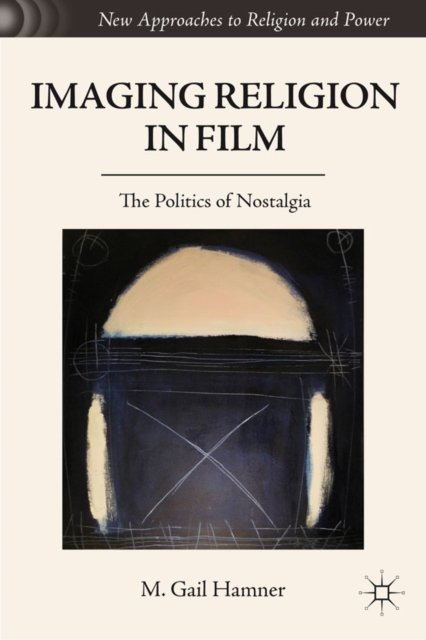
Imaging Religion in Film
Av M. Gail Hamner, 2011.Del av serien New Approaches to Religion and Power.
The Politics of Nostalgia
"Imaging Religion in Film offers a new methodology for examining the ethico-political dimensions of religion and film, one that foregrounds film's social power both to shape subjectivity and to image contemporary social contradictions. Specifically, the text develops a Foucauldian ethics of the subject, or 'pedagogy of self,' a Deleuzian-Peircean semiotic for discussing religion in film, and a theory of religion within postmodernity that rethinks transcendence alongside a politically galvanizing nostalgia. This theoretical work prefaces analyses of three specific films: Kurosawa's Dersu Uzala (1972)
Kiarostami's Taste of Cherry (1997)
and the Coens' The Man Who Wasn't There (2001)."
Språk: Engelsk
Oppdag mer
Imaging Religion in Film
Av M. Gail Hamner, 2011.Del av serien New Approaches to Religion and Power.
The Politics of Nostalgia
"Imaging Religion in Film offers a new methodology for examining the ethico-political dimensions of religion and film, one that foregrounds film's social power both to shape subjectivity and to image contemporary social contradictions. Specifically, the text develops a Foucauldian ethics of the subject, or 'pedagogy of self,' a Deleuzian-Peircean semiotic for discussing religion in film, and a theory of religion within postmodernity that rethinks transcendence alongside a politically galvanizing nostalgia. This theoretical work prefaces analyses of three specific films: Kurosawa's Dersu Uzala (1972)
Kiarostami's Taste of Cherry (1997)
and the Coens' The Man Who Wasn't There (2001)."
Oppdag mer
Språk: Engelsk
Ved å fullføre kjøpet aksepterer du kjøpsvilkårene.