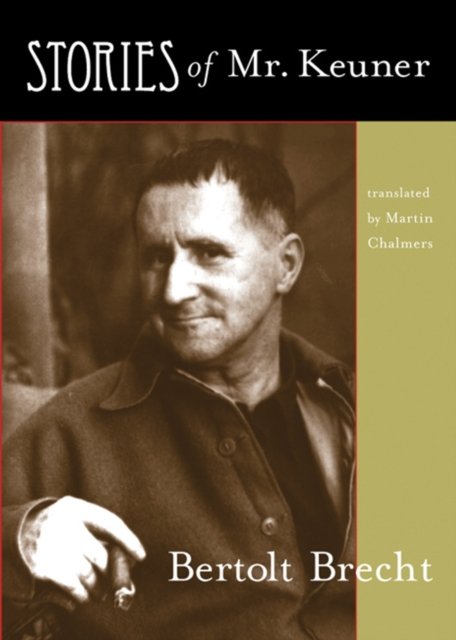
Stories of Mr. Keuner
Av Bertolt Brecht, 2001.
Stories of Mr. Keuner gathers Bertolt Brecht's fictionalized comments on politics, everyday life and exile. Written from the late 1920s till the late 1950s, Stories of Mr. Keuner is the precipitate of Brecht's experience of a world in political and cultural flux, a world of revolution, civil war, world war, cultural efflorescence, Nazism, Stalinism and the Cold War—in short, the first half of the twentieth century.
Mr. Keuner said, "I, too, once adopted an aristocratic stance (you know: erect, upright and proud, head thrown back). I was standing in rising water at the time. I adopted this posture when it rose to my chin."
"At first, they appear almost innocuous, these so-called stories, anecdotal fragments often of a single page or less. Brecht's scenarios seem so simple, his style so direct. He expressly wished what he wrote to be useful. Here he succeeded brilliantly: These pieces are small enough to be carried away whole, but what they say is big enough to be equal to the reader."—Johnathon Keats, SF Gate
"Stories of Mr. Keuner finally puts in English translation this startling and stunning body of work, not only encouraging a broader appreciation of a playwright famed for fighting inhumanity in his time, but also effectively questioning integrity in our own day."—San Francisco Chronicle Book Review
"The first English translation of the great playwright’s discursive semifictionalized observations on German life and politics, as spoken by the eponymous Keuner (his name from the German "keiner," meaning "no man"), a "thinking man" obviously inspired by Plato’s Socrates. Written between the 1920s and ‘50s (and collected for the first publication in 1956, the year of Brecht’s death), they’re brief (often single-paragraph) aperçus generally employed to deflate contemporary pretensions regarding religion, patriotism, capitalism, exile, and other themes engaged more fully in their author’s celebrated poems and plays (e.g., "I am for justice; so it’s good if the place in which I’m staying has more than one exit"), but most effectively adumbrated in this revealing coda to an indisputably major, and still challenging, body of work."—Kirkus Reviews
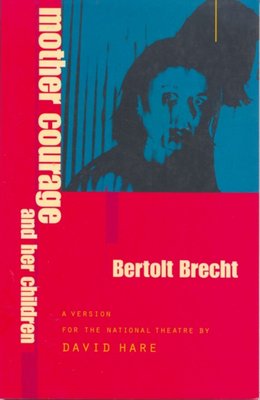
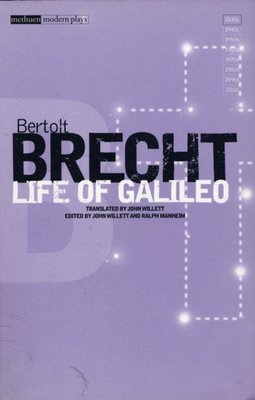
Bertolt Brecht wrote The Threepenny Opera, Mahagonny, Mother Courage, The Life of Galileo and many other plays, poems and theoretical writings. Ardent antifascist, friend to Walter Benjamin and wily ally of the COmmunists, Brecht was often on the run, "changing countries more than shoes." As Hitler's armies advanced, Brecht fled to Denmark, Sweden, Finland and the U.S. before finally settling in East Germany after the war, where he became director of the renowned Berliner Ensemble.
Martin Chalmers (1948-2014) had translated works by Victor Klemperer, Hans Magnus Enzensberger, Hubert Fichte and Elfriede Jelinek, among others. Mr. Chalmers lived in London, where he wrote extensively on German literature, film, history and culture.
Språk: Engelsk
Stories of Mr. Keuner
Av Bertolt Brecht, 2001.
Stories of Mr. Keuner gathers Bertolt Brecht's fictionalized comments on politics, everyday life and exile. Written from the late 1920s till the late 1950s, Stories of Mr. Keuner is the precipitate of Brecht's experience of a world in political and cultural flux, a world of revolution, civil war, world war, cultural efflorescence, Nazism, Stalinism and the Cold War—in short, the first half of the twentieth century.
Mr. Keuner said, "I, too, once adopted an aristocratic stance (you know: erect, upright and proud, head thrown back). I was standing in rising water at the time. I adopted this posture when it rose to my chin."
"At first, they appear almost innocuous, these so-called stories, anecdotal fragments often of a single page or less. Brecht's scenarios seem so simple, his style so direct. He expressly wished what he wrote to be useful. Here he succeeded brilliantly: These pieces are small enough to be carried away whole, but what they say is big enough to be equal to the reader."—Johnathon Keats, SF Gate
"Stories of Mr. Keuner finally puts in English translation this startling and stunning body of work, not only encouraging a broader appreciation of a playwright famed for fighting inhumanity in his time, but also effectively questioning integrity in our own day."—San Francisco Chronicle Book Review
"The first English translation of the great playwright’s discursive semifictionalized observations on German life and politics, as spoken by the eponymous Keuner (his name from the German "keiner," meaning "no man"), a "thinking man" obviously inspired by Plato’s Socrates. Written between the 1920s and ‘50s (and collected for the first publication in 1956, the year of Brecht’s death), they’re brief (often single-paragraph) aperçus generally employed to deflate contemporary pretensions regarding religion, patriotism, capitalism, exile, and other themes engaged more fully in their author’s celebrated poems and plays (e.g., "I am for justice; so it’s good if the place in which I’m staying has more than one exit"), but most effectively adumbrated in this revealing coda to an indisputably major, and still challenging, body of work."—Kirkus Reviews
Bertolt Brecht wrote The Threepenny Opera, Mahagonny, Mother Courage, The Life of Galileo and many other plays, poems and theoretical writings. Ardent antifascist, friend to Walter Benjamin and wily ally of the COmmunists, Brecht was often on the run, "changing countries more than shoes." As Hitler's armies advanced, Brecht fled to Denmark, Sweden, Finland and the U.S. before finally settling in East Germany after the war, where he became director of the renowned Berliner Ensemble.
Martin Chalmers (1948-2014) had translated works by Victor Klemperer, Hans Magnus Enzensberger, Hubert Fichte and Elfriede Jelinek, among others. Mr. Chalmers lived in London, where he wrote extensively on German literature, film, history and culture.
Språk: Engelsk
Ved å fullføre kjøpet aksepterer du kjøpsvilkårene.