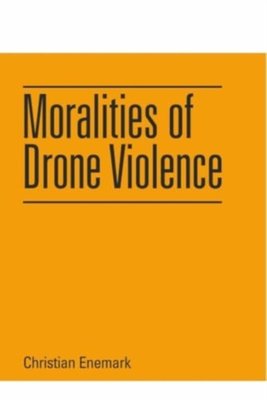

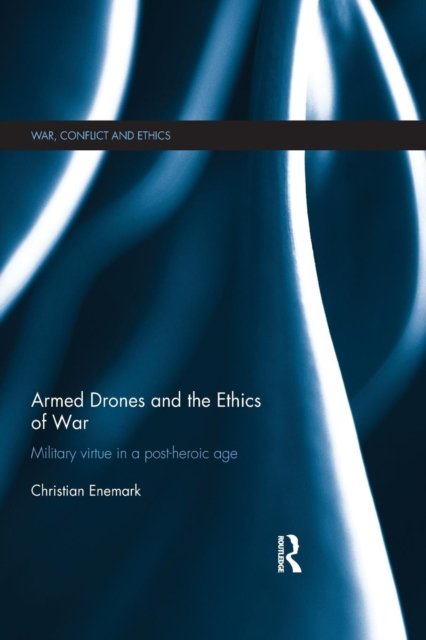
Av Christian Enemark, 2015.Del av serien War, Conflict and Ethics.
Military virtue in a post-heroic age
This book assesses the ethical implications of using armed unmanned aerial vehicles (hunter-killer drones) in contemporary conflicts.
The American way of war is trending away from the heroic and towards the post-heroic, driven by a political preference for air-powered management of strategic risks and the reduction of physical risk to US personnel. The recent use of drones in the War on Terror has demonstrated the power of this technology to transcend time and space, but there has been relatively little debate in the United States and elsewhere over the embrace of what might be regarded as politically desirable and yet morally worrisome: risk-free killing. Arguably, the absence of a relationship of mutual risk between putative combatants poses a fundamental challenge to the status of war as something morally distinguishable from other forms of violence, and it also undermines the professional virtue of the warrior as a courageous risk-taker.
This book considers the use of armed drones in the light of ethical principles that are intended to guard against unjust increases in the incidence and lethality of armed conflict. The evidence and arguments presented indicate that, in some respects, the use of armed drones is to be welcomed as an ethically superior mode of warfare. Over time, however, their continued and increased use is likely to generate more challenges than solutions, and perhaps do more harm than good.
This book will be of much interest to students of the ethics of war, airpower, counter-terrorism, strategic studies and security studies in general.
Språk: Engelsk
Ikke tilgjengelig for Klikk&Hent
Midlertidig tomt på lager
Bestillingsvare. Forventes sendt om ca 9 dager

Av Christian Enemark, 2015.Del av serien War, Conflict and Ethics.
Military virtue in a post-heroic age
This book assesses the ethical implications of using armed unmanned aerial vehicles (hunter-killer drones) in contemporary conflicts.
The American way of war is trending away from the heroic and towards the post-heroic, driven by a political preference for air-powered management of strategic risks and the reduction of physical risk to US personnel. The recent use of drones in the War on Terror has demonstrated the power of this technology to transcend time and space, but there has been relatively little debate in the United States and elsewhere over the embrace of what might be regarded as politically desirable and yet morally worrisome: risk-free killing. Arguably, the absence of a relationship of mutual risk between putative combatants poses a fundamental challenge to the status of war as something morally distinguishable from other forms of violence, and it also undermines the professional virtue of the warrior as a courageous risk-taker.
This book considers the use of armed drones in the light of ethical principles that are intended to guard against unjust increases in the incidence and lethality of armed conflict. The evidence and arguments presented indicate that, in some respects, the use of armed drones is to be welcomed as an ethically superior mode of warfare. Over time, however, their continued and increased use is likely to generate more challenges than solutions, and perhaps do more harm than good.
This book will be of much interest to students of the ethics of war, airpower, counter-terrorism, strategic studies and security studies in general.
Språk: Engelsk
Ikke tilgjengelig for Klikk&Hent
Midlertidig tomt på lager
Bestillingsvare. Forventes sendt om ca 9 dager
Ved å fullføre kjøpet aksepterer du kjøpsvilkårene.