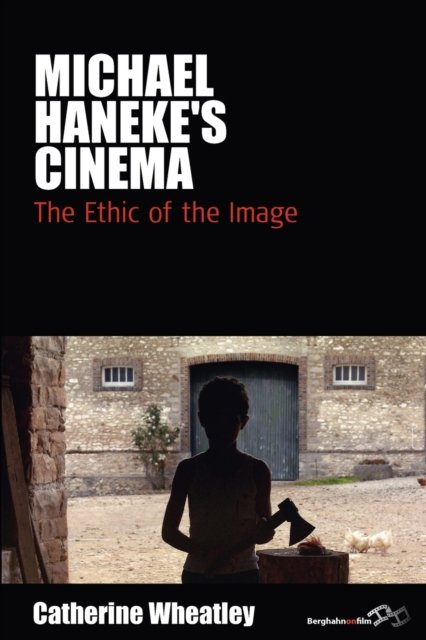
Michael Haneke''s Cinema
Av Catherine Wheatley, 2009.Del av serien Film Europa.
The Ethic of the Image
Existing critical traditions fail to fully account for the impact of Austrian director, and 2009 Cannes Palm d'Or winner, Michael Haneke’s films, situated as they are between intellectual projects and popular entertainments. In this first English-language introduction to, and critical analysis of, his work, each of Haneke’s eight feature films are considered in detail. Particular attention is given to what the author terms Michael Haneke’s ‘ethical cinema’ and the unique impact of these films upon their audiences.
Drawing on the moral philosophy of Immanuel Kant and Stanley Cavell, Catherine Wheatley, introduces a new way of marrying film and moral philosophy, which explicitly examines the ethics of the film viewing experience. Haneke’s films offer the viewer great freedom whilst simultaneously imposing a considerable burden of responsibility. How Haneke achieves this break with more conventional spectatorship models, and what its far-reaching implications are for film theory in general, constitute the principal subject of this book.
Ikke tilgjengelig for Klikk&Hent
Midlertidig tomt på lager
Bestillingsvare. Forventes sendt om ca 8 dager
Oppdag mer
Michael Haneke''s Cinema
Av Catherine Wheatley, 2009.Del av serien Film Europa.
The Ethic of the Image
Existing critical traditions fail to fully account for the impact of Austrian director, and 2009 Cannes Palm d'Or winner, Michael Haneke’s films, situated as they are between intellectual projects and popular entertainments. In this first English-language introduction to, and critical analysis of, his work, each of Haneke’s eight feature films are considered in detail. Particular attention is given to what the author terms Michael Haneke’s ‘ethical cinema’ and the unique impact of these films upon their audiences.
Drawing on the moral philosophy of Immanuel Kant and Stanley Cavell, Catherine Wheatley, introduces a new way of marrying film and moral philosophy, which explicitly examines the ethics of the film viewing experience. Haneke’s films offer the viewer great freedom whilst simultaneously imposing a considerable burden of responsibility. How Haneke achieves this break with more conventional spectatorship models, and what its far-reaching implications are for film theory in general, constitute the principal subject of this book.
Oppdag mer
Ikke tilgjengelig for Klikk&Hent
Midlertidig tomt på lager
Bestillingsvare. Forventes sendt om ca 8 dager
Ved å fullføre kjøpet aksepterer du kjøpsvilkårene.