Pensum -10%
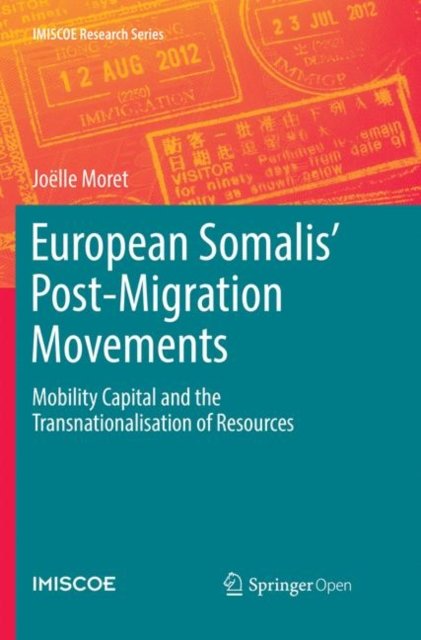
European Somalis' Post-Migration Movements
Joelle Moret
PocketEngelsk
Del av serien IMISCOE Research Series
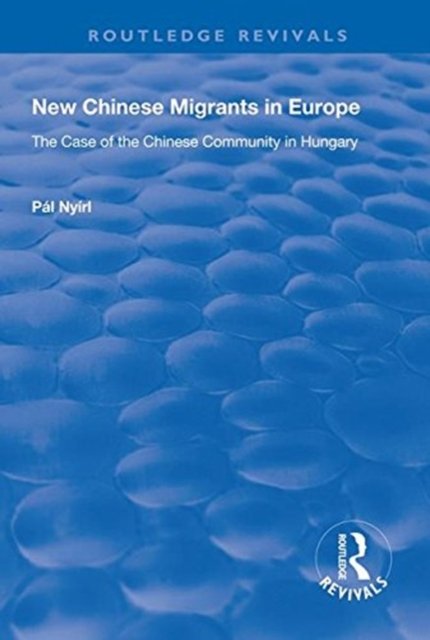
Av Pál Nyíri, 2018.Del av serien Routledge Revivals.
The Case of the Chinese Community in Hungary
First published in 1999, this book is a political enthnography of recent migration from the People’s Republic of China into Europe. It argues that the very high mobility and intensive communications of Chinese migrants enable them to maintain a transnational community within which they easily shift countries and social roles - from student to trader to worker - if doing so is economically expedient. This makes them the natural beneficiaries and users of the Western globalization discourse, even more so that - contrary to culturalist explanations of global Chinese networks - anonymity, sovereign decision making and freedom from social pressures are at least as important in motivating migration as family connections. Yet their identity discourse expresses an authentic Chinese globalization. Chinese migrants see themselves not as local minorities but as a global majority attached to China by a deterritorialised nationalism. This nationalism is not only encouraged by China’s official discourse but also supported by the economic dependence of new migrants on cultural capital built up in China, which makes them less reliant on resources in their countries of residence.
Språk: Engelsk
Ikke tilgjengelig for Klikk&Hent
Midlertidig tomt på lager
Bestillingsvare. Forventes sendt om ca 8 dager
Av Pál Nyíri, 2018.Del av serien Routledge Revivals.
The Case of the Chinese Community in Hungary
First published in 1999, this book is a political enthnography of recent migration from the People’s Republic of China into Europe. It argues that the very high mobility and intensive communications of Chinese migrants enable them to maintain a transnational community within which they easily shift countries and social roles - from student to trader to worker - if doing so is economically expedient. This makes them the natural beneficiaries and users of the Western globalization discourse, even more so that - contrary to culturalist explanations of global Chinese networks - anonymity, sovereign decision making and freedom from social pressures are at least as important in motivating migration as family connections. Yet their identity discourse expresses an authentic Chinese globalization. Chinese migrants see themselves not as local minorities but as a global majority attached to China by a deterritorialised nationalism. This nationalism is not only encouraged by China’s official discourse but also supported by the economic dependence of new migrants on cultural capital built up in China, which makes them less reliant on resources in their countries of residence.
Språk: Engelsk
Ikke tilgjengelig for Klikk&Hent
Midlertidig tomt på lager
Bestillingsvare. Forventes sendt om ca 8 dager
Ved å fullføre kjøpet aksepterer du kjøpsvilkårene.







Integrating Immigrants in the Netherlands
459,-

Public Policy in a Divided Society
489,-
Poland''s Post-War Dynamic of Migration
169,-
Regionalism in the Post-Cold War World
489,-
Integrating Immigrants in the Netherlands
1 929,-
Public Policy in a Divided Society
1 469,-
Poland''s Post-War Dynamic of Migration
409,-
Regionalism in the Post-Cold War World
1 729,-
The Geopolitics of South Asia: From Early Empires to India, Pakistan and Bangladesh
1 929,-
Race and Ethnic Relations in Today''s America
1 028,-
Integrating Immigrants in the Netherlands
459,-
Public Policy in a Divided Society
489,-
Poland''s Post-War Dynamic of Migration
169,-
Regionalism in the Post-Cold War World
489,-
Integrating Immigrants in the Netherlands
1 929,-
Public Policy in a Divided Society
1 469,-
Poland''s Post-War Dynamic of Migration
409,-
Regionalism in the Post-Cold War World
1 729,-
The Geopolitics of South Asia: From Early Empires to India, Pakistan and Bangladesh
1 929,-
Race and Ethnic Relations in Today''s America
1 028,-