Hopp til hovedinnholdet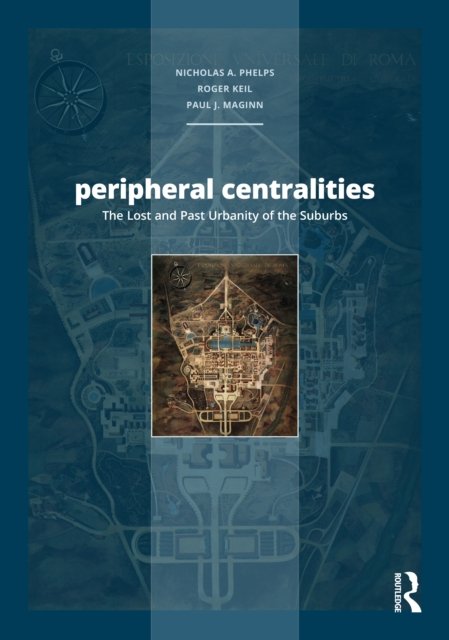
Peripheral Centralities
Redigert av Nicholas A. Phelps, Roger Keil, Paul Maginn, 2025.Del av serien Planning, History and Environment Series.
The Lost and Past Urbanity of the Suburbs
The term ?peripheral centralities? may seem something of an oxymoron and yet the spatial peripheries of cities have often been more central to urban development processes than appreciated. To better understand the nature peripheral centrality, Peripheral Centralities: The Lost and Past Urbanity of the Suburbs brings together a wide variety of examples of lost and forgotten peripheral centralities of different sizes, purpose, geographical location, and political complexion, dating from the first decades of the twentieth century to the present day. Following the introduction, two chapters provide broad overviews of peripheral centralities in international and national systems of centralities. The next four chapters look at plans from settings as different and Dublin as Shanghai that, for one reason or another, failed to materialize. The following eight chapters each describes cases where projects have been realized, ranging from peripheral townships in England to a Chinese steel city. To conclude the book, the editors highlight the themes revealed in the foregoing chapters and consider the part an appreciation of peripheral centralities might play in the development of urban theory from the outside in.
Språk: Engelsk
1 999,-
Ikke tilgjengelig for Klikk&Hent
Midlertidig tomt på lager
Bestillingsvare. Forventes sendt om ca 10 dager
Oppdag mer
Peripheral Centralities
Redigert av Nicholas A. Phelps, Roger Keil, Paul Maginn, 2025.Del av serien Planning, History and Environment Series.
The Lost and Past Urbanity of the Suburbs
The term ?peripheral centralities? may seem something of an oxymoron and yet the spatial peripheries of cities have often been more central to urban development processes than appreciated. To better understand the nature peripheral centrality, Peripheral Centralities: The Lost and Past Urbanity of the Suburbs brings together a wide variety of examples of lost and forgotten peripheral centralities of different sizes, purpose, geographical location, and political complexion, dating from the first decades of the twentieth century to the present day. Following the introduction, two chapters provide broad overviews of peripheral centralities in international and national systems of centralities. The next four chapters look at plans from settings as different and Dublin as Shanghai that, for one reason or another, failed to materialize. The following eight chapters each describes cases where projects have been realized, ranging from peripheral townships in England to a Chinese steel city. To conclude the book, the editors highlight the themes revealed in the foregoing chapters and consider the part an appreciation of peripheral centralities might play in the development of urban theory from the outside in.
Oppdag mer
1 999,-
Språk: Engelsk
Ikke tilgjengelig for Klikk&Hent
Midlertidig tomt på lager
Bestillingsvare. Forventes sendt om ca 10 dager
1 999,-
Ved å fullføre kjøpet aksepterer du kjøpsvilkårene.