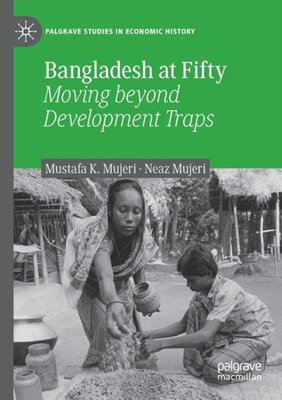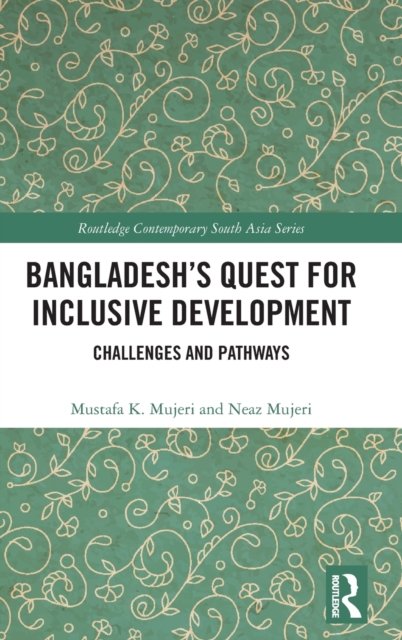
Av Mustafa K. Mujeri, Neaz Mujeri, 2022.Del av serien Routledge Contemporary South Asia Series.
Challenges and Pathways
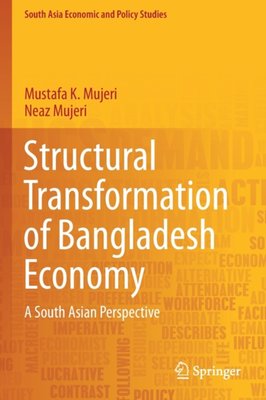
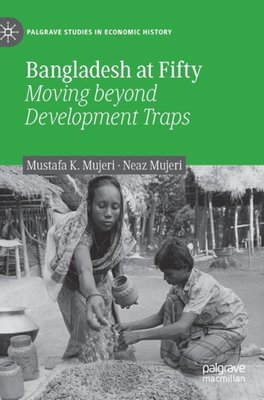
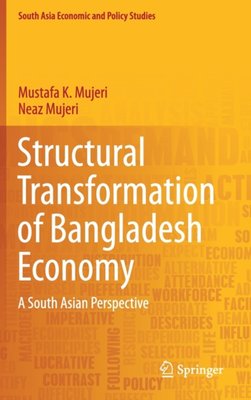
The book provides a comprehensive conceptual understanding covering major challenges and pathways to progressively promote inclusive development in Bangladesh.
Since independence in 1971, Bangladesh has achieved significant economic growth and social progress, but the benefits have not been shared equitably across all groups in society, and there is the demand that inclusive development should be at the core of the countrys development agenda. Analysing inclusive development in Bangladesh, the authors present it as synonymous with improving the well-being of all individuals in a comprehensive manner along with upholding the principles of equity and justice. The book shows that the multidimensionality of inclusive development facilitates the participation of all in society in development through enhancing capabilities and ensuring equal opportunities. The analysis highlights social investments in specific concerns of the marginalised and disadvantaged groups and unequal structural forces that compel the state to remain biased towards the rich and consequent elite capture of the state in Bangladesh. Arguing that Bangladesh has moved closer towards applying the inclusive development tenets in policy making, the books findings show that the challenge is the absence of any generic formula to ensure that the country is moving towards a more inclusive development path.
A valuable contribution to the study of Bangladeshs changing dynamics of political, economic and social configurations and development economics, the book will be of interest to researchers in the fields of economics, Asian studies and development studies.
Språk: Engelsk
Ikke tilgjengelig for Klikk&Hent
Midlertidig tomt på lager
Bestillingsvare. Forventes sendt om ca 9 dager

Av Mustafa K. Mujeri, Neaz Mujeri, 2022.Del av serien Routledge Contemporary South Asia Series.
Challenges and Pathways
The book provides a comprehensive conceptual understanding covering major challenges and pathways to progressively promote inclusive development in Bangladesh.
Since independence in 1971, Bangladesh has achieved significant economic growth and social progress, but the benefits have not been shared equitably across all groups in society, and there is the demand that inclusive development should be at the core of the countrys development agenda. Analysing inclusive development in Bangladesh, the authors present it as synonymous with improving the well-being of all individuals in a comprehensive manner along with upholding the principles of equity and justice. The book shows that the multidimensionality of inclusive development facilitates the participation of all in society in development through enhancing capabilities and ensuring equal opportunities. The analysis highlights social investments in specific concerns of the marginalised and disadvantaged groups and unequal structural forces that compel the state to remain biased towards the rich and consequent elite capture of the state in Bangladesh. Arguing that Bangladesh has moved closer towards applying the inclusive development tenets in policy making, the books findings show that the challenge is the absence of any generic formula to ensure that the country is moving towards a more inclusive development path.
A valuable contribution to the study of Bangladeshs changing dynamics of political, economic and social configurations and development economics, the book will be of interest to researchers in the fields of economics, Asian studies and development studies.
Språk: Engelsk
Ikke tilgjengelig for Klikk&Hent
Midlertidig tomt på lager
Bestillingsvare. Forventes sendt om ca 9 dager
Ved å fullføre kjøpet aksepterer du kjøpsvilkårene.


Nettlager

Nettlager


Nettlager


Nettlager

Nettlager

Nettlager

Nettlager

Nettlager

Nettlager

Nettlager

Nettlager

Nettlager

Nettlager

Nettlager

Nettlager

Nettlager

Nettlager

Nettlager

Nettlager