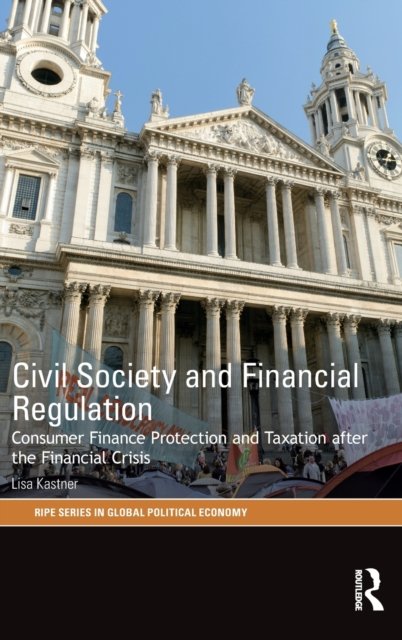
Av Lisa Kastner, 2017.Del av serien RIPE Series in Global Political Economy.
Consumer Finance Protection and Taxation after the Financial Crisis
Coalitions of consumer groups, NGOs, and trade unions have traditionally been considered politically weak compared to well-organized and resourceful financial sector groups which dominate or "capture" financial regulatory decisions. However, following the 2008 financial crisis, civil society groups have been seen to exert much more influence, with politicians successfully implementing financial reform in spite of industry opposition.
Drawing on literature from social movement research and regulatory politics, this book shows how diffuse interests were represented in financial regulatory overhauls in both the United States (US) and the European Union (EU). Four cases of reform in the post-crisis regulatory context are analyzed: the creation of a new Consumer Financial Protection Bureau in the US; the introduction of new consumer protection regulations through EU directives; the failure of attempts to introduce a financial transaction tax in the US; and the agreement of 11 EU member states to introduce such a tax. It shows how building coalitions with important elite allies outside and inside government helped traditionally weak interest groups transcend a lack of material resources to influence and shape regulatory policy.
By engaging with a less well-known side of the debate, it explains how business power was curbed and diverse interests translated into financial regulatory policy.
Språk: Engelsk
Ikke tilgjengelig for Klikk&Hent
Midlertidig tomt på lager
Bestillingsvare. Forventes sendt om ca 9 dager

Av Lisa Kastner, 2017.Del av serien RIPE Series in Global Political Economy.
Consumer Finance Protection and Taxation after the Financial Crisis
Coalitions of consumer groups, NGOs, and trade unions have traditionally been considered politically weak compared to well-organized and resourceful financial sector groups which dominate or "capture" financial regulatory decisions. However, following the 2008 financial crisis, civil society groups have been seen to exert much more influence, with politicians successfully implementing financial reform in spite of industry opposition.
Drawing on literature from social movement research and regulatory politics, this book shows how diffuse interests were represented in financial regulatory overhauls in both the United States (US) and the European Union (EU). Four cases of reform in the post-crisis regulatory context are analyzed: the creation of a new Consumer Financial Protection Bureau in the US; the introduction of new consumer protection regulations through EU directives; the failure of attempts to introduce a financial transaction tax in the US; and the agreement of 11 EU member states to introduce such a tax. It shows how building coalitions with important elite allies outside and inside government helped traditionally weak interest groups transcend a lack of material resources to influence and shape regulatory policy.
By engaging with a less well-known side of the debate, it explains how business power was curbed and diverse interests translated into financial regulatory policy.
Språk: Engelsk
Ikke tilgjengelig for Klikk&Hent
Midlertidig tomt på lager
Bestillingsvare. Forventes sendt om ca 9 dager
Ved å fullføre kjøpet aksepterer du kjøpsvilkårene.

Nettlager

Nettlager


Nettlager

Nettlager

Nettlager


Nettlager

Nettlager

Nettlager

Nettlager

Nettlager

Nettlager

Nettlager

Nettlager

Nettlager

Nettlager

Nettlager

Nettlager