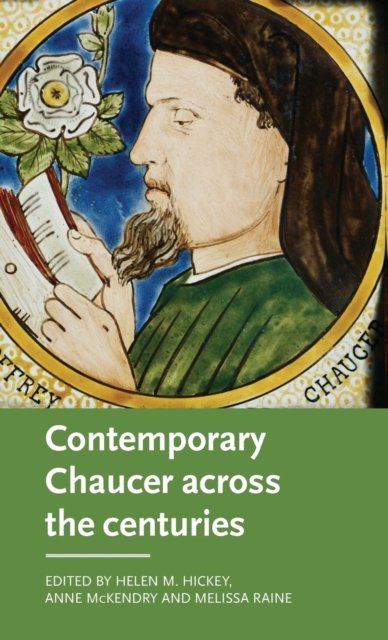
Contemporary Chaucer across the centuries
Redigert av Anne McKendry, Melissa Raine, Helen Hickey, 2018.Del av serien Manchester Medieval Literature and Culture.
For 700 years, Geoffrey Chaucer has spoken to scholars and amateurs alike. How does his work speak to us in the twenty-first century? Within the fluctuating trends of the critical moment, this volume provides a unique vantage point for responding to this question, furnished by the signature intellectual framework of pioneering medieval literature scholar Stephanie Trigg: the symptomatic long history.
While Trigg's scholarship acts as a springboard for the vibrant conversations in this collection, each chapter offers an inspiring extension of her legacy. The outstanding contributors delve into a diverse range of subjects that frequently cross boundaries. Formerly rigid demarcations surrounding medieval literary studies give way to an increasingly fluid interplay between Chaucer within his medieval context; medievalism and ‘reception’; the rigours of scholarly research and the recognition of amateur engagement with the past; the significance of the history of emotions; and the connection between textuality, subjectivity and the world they inhabit.
Each chapter engages with one or more of these themes, providing a distinctive and often startling interpretation of Chaucer that broadens our understanding of the dynamic relationship between the medieval past and its ongoing re-evaluation. The inventive strategies employed in this volume will stimulate exciting and timely insights for researchers and students of Chaucer, medievalism, medieval studies, and history of emotions, especially those interested in interdisciplinary approaches to the relationship between medieval literature, the intervening centuries and contemporary cultural change.
Ved å fullføre kjøpet aksepterer jeg kjøpsvilkårene.
Ikke tilgjengelig for Klikk&Hent
På nettlager. Bestilles fra England. Leveres normalt innen 5-8 virkedager.
Contemporary Chaucer across the centuries
Redigert av Anne McKendry, Melissa Raine, Helen Hickey, 2018.Del av serien Manchester Medieval Literature and Culture.
For 700 years, Geoffrey Chaucer has spoken to scholars and amateurs alike. How does his work speak to us in the twenty-first century? Within the fluctuating trends of the critical moment, this volume provides a unique vantage point for responding to this question, furnished by the signature intellectual framework of pioneering medieval literature scholar Stephanie Trigg: the symptomatic long history.
While Trigg's scholarship acts as a springboard for the vibrant conversations in this collection, each chapter offers an inspiring extension of her legacy. The outstanding contributors delve into a diverse range of subjects that frequently cross boundaries. Formerly rigid demarcations surrounding medieval literary studies give way to an increasingly fluid interplay between Chaucer within his medieval context; medievalism and ‘reception’; the rigours of scholarly research and the recognition of amateur engagement with the past; the significance of the history of emotions; and the connection between textuality, subjectivity and the world they inhabit.
Each chapter engages with one or more of these themes, providing a distinctive and often startling interpretation of Chaucer that broadens our understanding of the dynamic relationship between the medieval past and its ongoing re-evaluation. The inventive strategies employed in this volume will stimulate exciting and timely insights for researchers and students of Chaucer, medievalism, medieval studies, and history of emotions, especially those interested in interdisciplinary approaches to the relationship between medieval literature, the intervening centuries and contemporary cultural change.
Ved å fullføre kjøpet aksepterer jeg kjøpsvilkårene.
Ikke tilgjengelig for Klikk&Hent
På nettlager. Bestilles fra England. Leveres normalt innen 5-8 virkedager.
Ved å fullføre kjøpet aksepterer du kjøpsvilkårene.