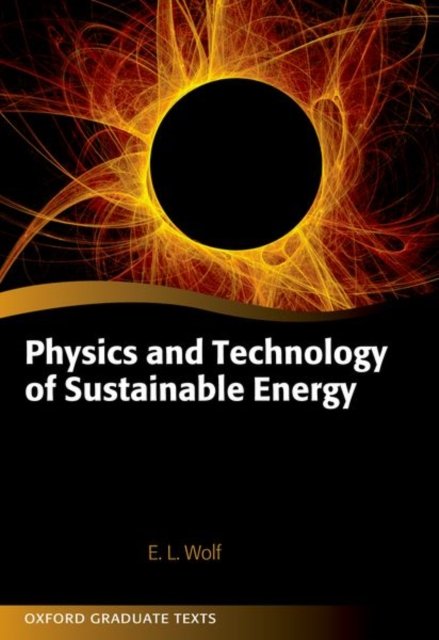
Physics and Technology of Sustainable Energy
Prof Edward Wolf
InnbundetEngelsk
Del av serien Oxford Graduate Texts
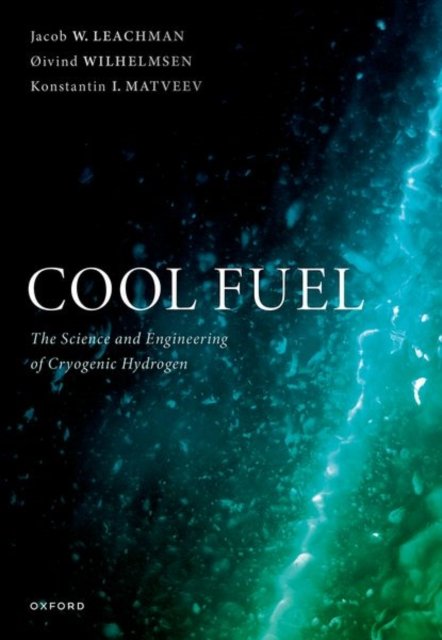
Av Jacob W. Leachman, Øivind Wilhelmsen, Konstantin I. Matveev, 2025.
The Science and Engineering of Cryogenic Hydrogen
Hydrogen, the first and most abundant element in our universe, is an essential zero-carbon fuel in humanity's race against catastrophic climate change. However, very few have access to cryogenic hydrogen systems to gain the necessary experience to contribute. This textbook is written as an invitation for scientists and engineers with experience in thermodynamics, fluid mechanics, and heat transfer to engage in this race for the future via cryogenic hydrogen research and development. It begins with the history of hydrogen and cryogenics to create a context for current needs. Next, the text builds a foundation for hydrogen's unique quantum mechanical effects on bulk thermophysical properties, and how to choose from and utilize available property models. Practical methods are presented for sensing and conversion between the quantum mechanical forms.Foundational aspects of hydrogen liquefaction and cooling in recuperative and regenerative cycles are presented next. Elements of hydrogen transfer phenomena, including recently developed two-phase flow correlations and thermoacoustic instabilities are discussed. An extensive analysis of liquid hydrogen storage system options is presented. The final chapter of the textbook overviews the Cool Fuel School, a hands-on cryogenic hydrogen training course that helps readers develop a new system design and associated cryogenic hydrogen safety plan. Readers of this book should gain confidence in the foundational aspects of cryogenic hydrogen science and engineering.
Ved å fullføre kjøpet aksepterer jeg kjøpsvilkårene.
Ikke tilgjengelig for Klikk&Hent
På nettlager. Bestilles fra England. Leveres normalt innen 5-8 virkedager.
Av Jacob W. Leachman, Øivind Wilhelmsen, Konstantin I. Matveev, 2025.
The Science and Engineering of Cryogenic Hydrogen
Hydrogen, the first and most abundant element in our universe, is an essential zero-carbon fuel in humanity's race against catastrophic climate change. However, very few have access to cryogenic hydrogen systems to gain the necessary experience to contribute. This textbook is written as an invitation for scientists and engineers with experience in thermodynamics, fluid mechanics, and heat transfer to engage in this race for the future via cryogenic hydrogen research and development. It begins with the history of hydrogen and cryogenics to create a context for current needs. Next, the text builds a foundation for hydrogen's unique quantum mechanical effects on bulk thermophysical properties, and how to choose from and utilize available property models. Practical methods are presented for sensing and conversion between the quantum mechanical forms.Foundational aspects of hydrogen liquefaction and cooling in recuperative and regenerative cycles are presented next. Elements of hydrogen transfer phenomena, including recently developed two-phase flow correlations and thermoacoustic instabilities are discussed. An extensive analysis of liquid hydrogen storage system options is presented. The final chapter of the textbook overviews the Cool Fuel School, a hands-on cryogenic hydrogen training course that helps readers develop a new system design and associated cryogenic hydrogen safety plan. Readers of this book should gain confidence in the foundational aspects of cryogenic hydrogen science and engineering.
Ved å fullføre kjøpet aksepterer jeg kjøpsvilkårene.
Ikke tilgjengelig for Klikk&Hent
På nettlager. Bestilles fra England. Leveres normalt innen 5-8 virkedager.
Ved å fullføre kjøpet aksepterer du kjøpsvilkårene.