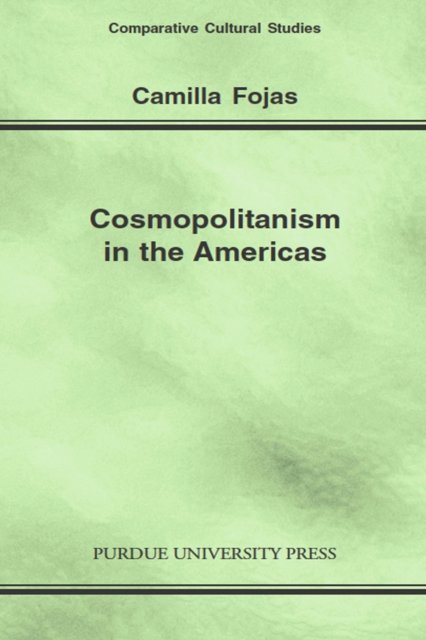
Cosmopolitanism in the Americas
Av Camilla Fojas, 2005.Del av serien Comparative Cultural Studies.
Fojas's book is a study about the aporia between cosmopolitanism as a sign of justice and cosmopolitanism as the consumption and display of international luxury items and cultural production. Turn of the century Pan-American cosmopolitanism described international aesthetic culture and fashion drawn from major world cities, but it was also implicitly political, it held a promise of justice in the acceptance and coexistence of difference. Being cosmopolitan was an orientation towards the cosmopolis in a search for models of tolerance and openness for different lifestyles, ways of being, and gender and sexual identities. Fojas engages the work of Guatemalan Enrique Gomez Carrillo, the travel writings from the Chicago World's Fair of Cuban Aurelia Castillo de Gonzalez, the Venezuelan journal Cosmopoils, and Rodo's infamous Ariel, all of which share a common principle of the practical application of cosmopolitanism. These figures grapple with cosmopolitanism, sometimes conceptualizing new models of hospitality and sometimes failing, nonetheless keeping the broken promise of utopist spaces and their imagined cities.
Ikke tilgjengelig for Klikk&Hent
Midlertidig tomt på lager
Bestillingsvare. Forventes sendt om ca 11 dager
Cosmopolitanism in the Americas
Av Camilla Fojas, 2005.Del av serien Comparative Cultural Studies.
Fojas's book is a study about the aporia between cosmopolitanism as a sign of justice and cosmopolitanism as the consumption and display of international luxury items and cultural production. Turn of the century Pan-American cosmopolitanism described international aesthetic culture and fashion drawn from major world cities, but it was also implicitly political, it held a promise of justice in the acceptance and coexistence of difference. Being cosmopolitan was an orientation towards the cosmopolis in a search for models of tolerance and openness for different lifestyles, ways of being, and gender and sexual identities. Fojas engages the work of Guatemalan Enrique Gomez Carrillo, the travel writings from the Chicago World's Fair of Cuban Aurelia Castillo de Gonzalez, the Venezuelan journal Cosmopoils, and Rodo's infamous Ariel, all of which share a common principle of the practical application of cosmopolitanism. These figures grapple with cosmopolitanism, sometimes conceptualizing new models of hospitality and sometimes failing, nonetheless keeping the broken promise of utopist spaces and their imagined cities.
Ikke tilgjengelig for Klikk&Hent
Midlertidig tomt på lager
Bestillingsvare. Forventes sendt om ca 11 dager
Ved å fullføre kjøpet aksepterer du kjøpsvilkårene.