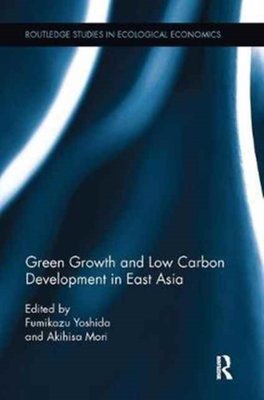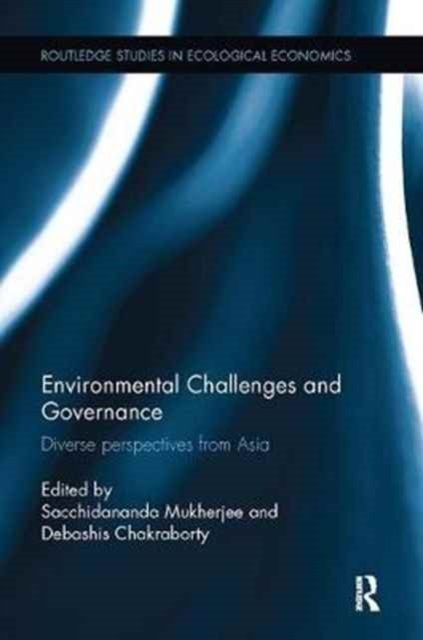

Redigert av Debashis Chakraborty, Sacchidananda Mukherjee, 2017.Del av serien Routledge Studies in Ecological Economics.
Diverse perspectives from Asia
The economies located in East, South and Southeast Asia have witnessed an interesting growth-sustainability trade-off over the last decades. While growth considerations have paved ways for deepened ties with growing trade-investment waves and increasing population pressure necessitated exploitation of hitherto unutilized natural resources, focus on environmental sustainability has been a recent consideration. The growth impetus still playing a key role in these economies, it becomes imperative that the countries effectively address the key sustainability concerns, e.g. air and water pollution, land degradation, loss of biodiversity, climate change issues like CO2 emissions etc. But how prepared is the governance mechanism of these countries, covering not only the legislative and administrative framework but also involvement of the judiciary, presence of spirited civil society and active engagement of stakeholders in policy-framing dialogues, to rise up to these challenges?
The book seeks an answer to this question through the environmental governance mechanism and natural resource conservation policies in three vibrant regions within Asia. A holistic development dimension of sustainable development path emerges, through discussion of policies adopted by developed (Japan, South Korea), upper-middle (China, Malaysia), developing (India, Indonesia, Philippines, Sri Lanka, Thailand) and least developed countries (Bangladesh, Myanmar, Nepal).
Språk: Engelsk
Ikke tilgjengelig for Klikk&Hent
Midlertidig tomt på lager
Bestillingsvare. Forventes sendt om ca 9 dager

Redigert av Debashis Chakraborty, Sacchidananda Mukherjee, 2017.Del av serien Routledge Studies in Ecological Economics.
Diverse perspectives from Asia
The economies located in East, South and Southeast Asia have witnessed an interesting growth-sustainability trade-off over the last decades. While growth considerations have paved ways for deepened ties with growing trade-investment waves and increasing population pressure necessitated exploitation of hitherto unutilized natural resources, focus on environmental sustainability has been a recent consideration. The growth impetus still playing a key role in these economies, it becomes imperative that the countries effectively address the key sustainability concerns, e.g. air and water pollution, land degradation, loss of biodiversity, climate change issues like CO2 emissions etc. But how prepared is the governance mechanism of these countries, covering not only the legislative and administrative framework but also involvement of the judiciary, presence of spirited civil society and active engagement of stakeholders in policy-framing dialogues, to rise up to these challenges?
The book seeks an answer to this question through the environmental governance mechanism and natural resource conservation policies in three vibrant regions within Asia. A holistic development dimension of sustainable development path emerges, through discussion of policies adopted by developed (Japan, South Korea), upper-middle (China, Malaysia), developing (India, Indonesia, Philippines, Sri Lanka, Thailand) and least developed countries (Bangladesh, Myanmar, Nepal).
Språk: Engelsk
Ikke tilgjengelig for Klikk&Hent
Midlertidig tomt på lager
Bestillingsvare. Forventes sendt om ca 9 dager
Ved å fullføre kjøpet aksepterer du kjøpsvilkårene.

Nettlager

Nettlager

Nettlager

Nettlager

Nettlager

Nettlager

Nettlager

Nettlager


Nettlager

Nettlager

Nettlager

Nettlager

Nettlager

Nettlager

Nettlager

Nettlager

Nettlager