
Hopp til hovedinnholdet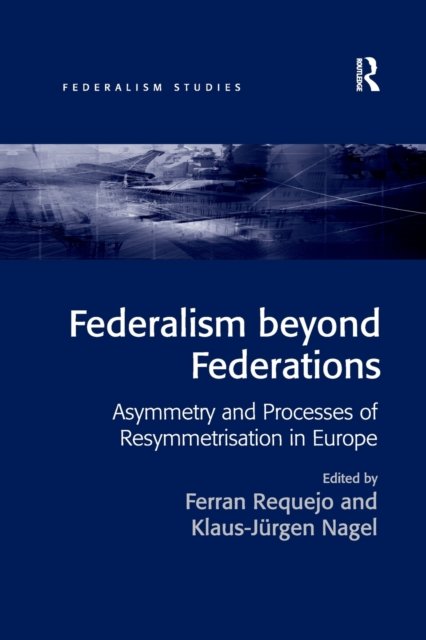
Federalism beyond Federations
Redigert av Ferran Requejo, Nagel Klaus-Jürgen, 2016.Del av serien Federalism Studies.
Asymmetry and Processes of Resymmetrisation in Europe
Since the end of the Second World War, a set of democratic European countries have established a decentralized system of government based on federal or regional patterns. Some of these systems initially displayed an asymmetrical trend, however, some democracies have implemented a subsequent process of re-symmetrization that changes the structure and the legitimization of the previous political agreements. Charting the evolution of decentralization processes and asymmetries implemented in Belgium, Denmark, Finland, France, Italy, Portugal, Russia, Spain, Ukraine and the United Kingdom, leading international scholars illustrate which countries have evolved more symmetrically, why this is so and what the role of political actors in these processes have been. In doing so, each case study: - Examines the causes of the legal and constitutional asymmetries and the main political cleavages. - Analyses the main institutions, actors and factors that influence the political dynamics of the territorial debate. - Questions whether there is such a process of re-symmetrization - Presents the main actors in favour of the process of re-symmetrization and of maintaining the constitutional and legal asymmetries Written accessibly and contributing to key debates on federalism and asymmetry, Federalism beyond Federations appeals to academics, politicians, decision-makers and all those interested in the political problems facing modern democracies.
Språk: Engelsk
749,-
Ikke tilgjengelig for Klikk&Hent
Midlertidig tomt på lager
Bestillingsvare. Forventes sendt om ca 8 dager
Federalism beyond Federations
Redigert av Ferran Requejo, Nagel Klaus-Jürgen, 2016.Del av serien Federalism Studies.
Asymmetry and Processes of Resymmetrisation in Europe
Since the end of the Second World War, a set of democratic European countries have established a decentralized system of government based on federal or regional patterns. Some of these systems initially displayed an asymmetrical trend, however, some democracies have implemented a subsequent process of re-symmetrization that changes the structure and the legitimization of the previous political agreements. Charting the evolution of decentralization processes and asymmetries implemented in Belgium, Denmark, Finland, France, Italy, Portugal, Russia, Spain, Ukraine and the United Kingdom, leading international scholars illustrate which countries have evolved more symmetrically, why this is so and what the role of political actors in these processes have been. In doing so, each case study: - Examines the causes of the legal and constitutional asymmetries and the main political cleavages. - Analyses the main institutions, actors and factors that influence the political dynamics of the territorial debate. - Questions whether there is such a process of re-symmetrization - Presents the main actors in favour of the process of re-symmetrization and of maintaining the constitutional and legal asymmetries Written accessibly and contributing to key debates on federalism and asymmetry, Federalism beyond Federations appeals to academics, politicians, decision-makers and all those interested in the political problems facing modern democracies.
749,-
Språk: Engelsk
Ikke tilgjengelig for Klikk&Hent
Midlertidig tomt på lager
Bestillingsvare. Forventes sendt om ca 8 dager
749,-
Ved å fullføre kjøpet aksepterer du kjøpsvilkårene.