Hopp til hovedinnholdet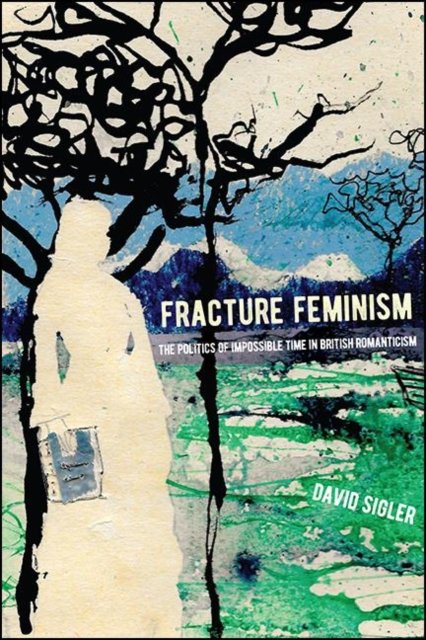
Fracture Feminism
Av David Sigler, 2021.Del av serien SUNY series, Studies in the Long Nineteenth Century.
The Politics of Impossible Time in British Romanticism
Shows how feminist writing in British Romanticism developed alternatives to linear time.
Feminist writers in British Romanticism often developed alternatives to linear time. Viewing time as a system of social control, writers like Mary Wollstonecraft, Anna Barbauld, and Mary Shelley wrote about current events as if they possessed knowledge from the future. Fracture Feminism explores this tradition with a perspective informed by Lacanian psychoanalysis and Derridean deconstruction, showing how time can be imagined to contain a hidden fracture-and how that fracture, when claimed as a point of view, could be the basis for an emancipatory politics. Arguing that the period's most radical experiments in undoing time stemmed from the era's discourses of gender and women's rights, Fracture Feminism asks: to what extent could women "belong" to their historical moment, given their political and social marginalization? How would voices from the future interrupt the ordinary procedures of political debate? What if utopia were understood as a time rather than a place, and its time were already inside the present?
Språk: Engelsk
Normalpris: 999,-
899,-
Spar 100,-
Ikke tilgjengelig for Klikk&Hent
Midlertidig tomt på lager
Bestillingsvare. Forventes sendt om ca 9 dager
Fracture Feminism
Av David Sigler, 2021.Del av serien SUNY series, Studies in the Long Nineteenth Century.
The Politics of Impossible Time in British Romanticism
Shows how feminist writing in British Romanticism developed alternatives to linear time.
Feminist writers in British Romanticism often developed alternatives to linear time. Viewing time as a system of social control, writers like Mary Wollstonecraft, Anna Barbauld, and Mary Shelley wrote about current events as if they possessed knowledge from the future. Fracture Feminism explores this tradition with a perspective informed by Lacanian psychoanalysis and Derridean deconstruction, showing how time can be imagined to contain a hidden fracture-and how that fracture, when claimed as a point of view, could be the basis for an emancipatory politics. Arguing that the period's most radical experiments in undoing time stemmed from the era's discourses of gender and women's rights, Fracture Feminism asks: to what extent could women "belong" to their historical moment, given their political and social marginalization? How would voices from the future interrupt the ordinary procedures of political debate? What if utopia were understood as a time rather than a place, and its time were already inside the present?
Normalpris: 999,-
899,-
Spar 100,-
Språk: Engelsk
Ikke tilgjengelig for Klikk&Hent
Midlertidig tomt på lager
Bestillingsvare. Forventes sendt om ca 9 dager
899,-
Ved å fullføre kjøpet aksepterer du kjøpsvilkårene.