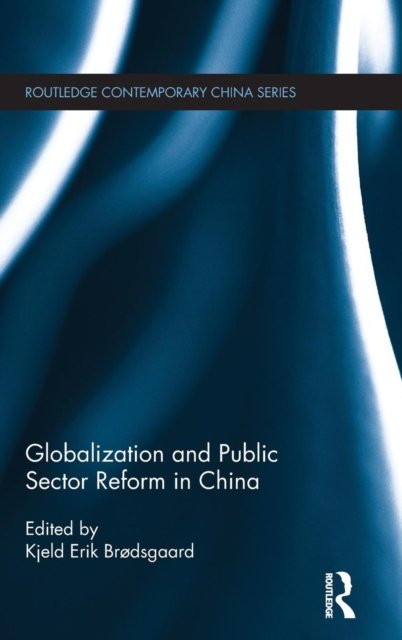
Globalization and Public Sector Reform in China
Redigert av Kjeld Erik Brødsgaard, 2014.Del av serien Routledge Contemporary China Series.
This book analyses public sector reform comprehensively in all parts of China’s public sector – government bureaucracy, public service units and state-owned enterprises. It argues that reform of the public sector has become an issue of great concern to the Chinese leaders, who realize that efficient public administration is key to securing the regime’s governing capacity and its future survival. The book shows how thinking about public sector reform has shifted in recent decades from a quantitative emphasis on 'small government', which involved the reduction in size of what was perceived as a bloated bureaucracy, to an emphasis on the quality of governance, which may result in an increase in public sector personnel. The book shows how, although Western ideas about public sector reform have had an impact, Chinese government continues to be best characterized as 'state capitalism', with the large state-owned enterprises continuing to play an important – and increasing – role in the economy and in business. However, state-owned enterprises no longer provide care for large numbers of people from the cradle to the grave – finding an alternative, efficient way of delivering basic welfare and health care is the big challenge facing China’s public sector.
Språk: Engelsk
Ikke tilgjengelig for Klikk&Hent
Midlertidig tomt på lager
Bestillingsvare. Forventes sendt om ca 8 dager
Oppdag mer
Globalization and Public Sector Reform in China
Redigert av Kjeld Erik Brødsgaard, 2014.Del av serien Routledge Contemporary China Series.
This book analyses public sector reform comprehensively in all parts of China’s public sector – government bureaucracy, public service units and state-owned enterprises. It argues that reform of the public sector has become an issue of great concern to the Chinese leaders, who realize that efficient public administration is key to securing the regime’s governing capacity and its future survival. The book shows how thinking about public sector reform has shifted in recent decades from a quantitative emphasis on 'small government', which involved the reduction in size of what was perceived as a bloated bureaucracy, to an emphasis on the quality of governance, which may result in an increase in public sector personnel. The book shows how, although Western ideas about public sector reform have had an impact, Chinese government continues to be best characterized as 'state capitalism', with the large state-owned enterprises continuing to play an important – and increasing – role in the economy and in business. However, state-owned enterprises no longer provide care for large numbers of people from the cradle to the grave – finding an alternative, efficient way of delivering basic welfare and health care is the big challenge facing China’s public sector.
Oppdag mer
Språk: Engelsk
Ikke tilgjengelig for Klikk&Hent
Midlertidig tomt på lager
Bestillingsvare. Forventes sendt om ca 8 dager
Ved å fullføre kjøpet aksepterer du kjøpsvilkårene.