Hopp til hovedinnholdet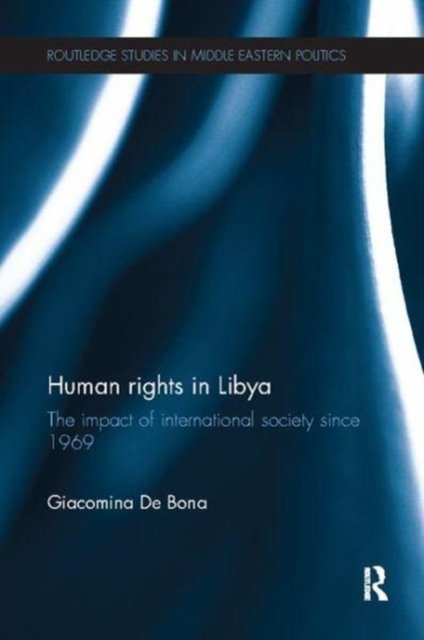
Human Rights in Libya
Av Giacomina De Bona, 2017.Del av serien Routledge Studies in Middle Eastern Politics.
The Impact of International Society Since 1969
Since the end of the Cold War a democratic wave has swept through large parts of the world, propagating liberal values and giving impetus to the case for human rights in an international society. To date however, the promotion of human rights has presented a mixed account with some countries lagging behind others in terms of their observance. In an effort to account for these differences, this book analyzes the relationship between norms and the social construction of international society, and examines how human rights are promoted in that context.
Focussing on Libya as a case study, Giacomina De Bona criticises the neo-realist approach by demonstrating the impact of international society on the advancement of human rights. Libya has related to the international environment in different ways over time, ranging from isolation to reconciliation and regime change, making it a particularly interesting example.
This book is of particular relevance in light of the recent Arab Spring and raises the question as to whether the coercive imposition of the Western liberal model contributes to establishing respect for human rights in what continue to be the peripheral zones of international society.
Språk: Engelsk
679,-
Ikke tilgjengelig for Klikk&Hent
Midlertidig tomt på lager
Bestillingsvare. Forventes sendt om ca 10 dager
Human Rights in Libya
Av Giacomina De Bona, 2017.Del av serien Routledge Studies in Middle Eastern Politics.
The Impact of International Society Since 1969
Since the end of the Cold War a democratic wave has swept through large parts of the world, propagating liberal values and giving impetus to the case for human rights in an international society. To date however, the promotion of human rights has presented a mixed account with some countries lagging behind others in terms of their observance. In an effort to account for these differences, this book analyzes the relationship between norms and the social construction of international society, and examines how human rights are promoted in that context.
Focussing on Libya as a case study, Giacomina De Bona criticises the neo-realist approach by demonstrating the impact of international society on the advancement of human rights. Libya has related to the international environment in different ways over time, ranging from isolation to reconciliation and regime change, making it a particularly interesting example.
This book is of particular relevance in light of the recent Arab Spring and raises the question as to whether the coercive imposition of the Western liberal model contributes to establishing respect for human rights in what continue to be the peripheral zones of international society.
679,-
Språk: Engelsk
Ikke tilgjengelig for Klikk&Hent
Midlertidig tomt på lager
Bestillingsvare. Forventes sendt om ca 10 dager
679,-
Ved å fullføre kjøpet aksepterer du kjøpsvilkårene.