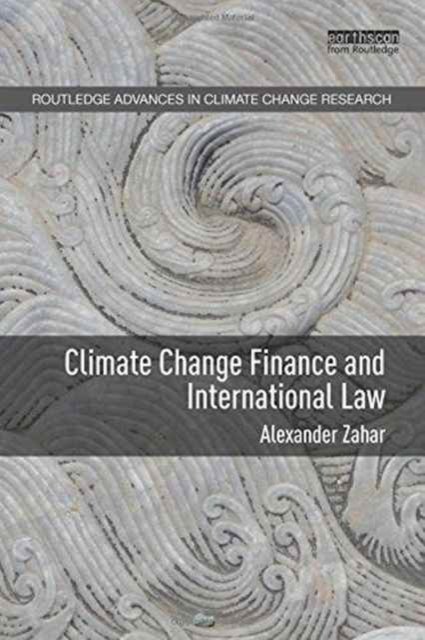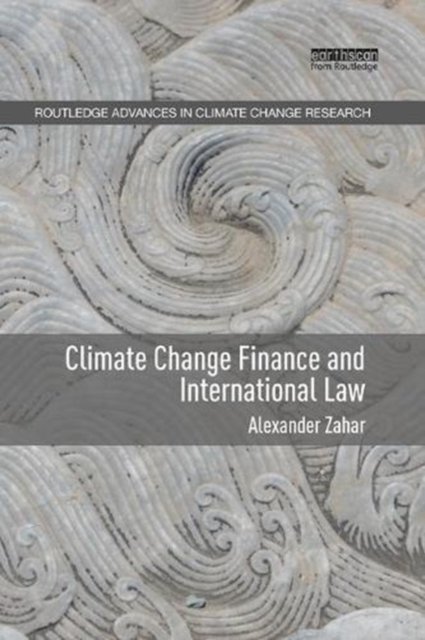
Climate Change Finance and International Law
Alexander Zahar
PocketEngelsk
Del av serien Routledge Advances in Climate Change Research
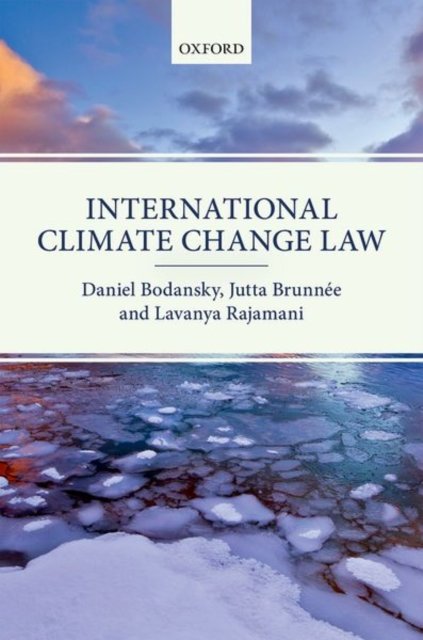
Av Daniel Bodansky, Lavanya Rajamani, Jutta Brunnee, 2017.
This textbook, by three experts in the field, provides a comprehensive overview of international climate change law. Climate change is one of the fundamental challenges facing the world today, and is the cause of significant international concern. In response, states have created an international climate regime. The treaties that comprise the regime - the 1992 United Nations Framework Convention on Climate Change, the 1997 Kyoto Protocol and the 2015 Paris Agreement establish a system of governance to address climate change and its impacts. This book provides a clear analytical guide to the climate regime, as well as other relevant international legal rules. The book begins by locating international climate change law within the broader context of international law and international environmental law. It considers the evolution of the international climate change regime, and the process of law-making that has led to it. It examines the key provisions of the Framework Convention, the Kyoto Protocol and the Paris Agreement. It analyses the principles and obligations that underpin the climate regime, as well as the elaborate institutional and governance architecture that has been created at successive international conferences to develop commitments and promote transparency and compliance. The final two chapters address the polycentric nature of international climate change law, as well as the intersections of international climate change law with other areas of international regulation. This book is an essential introduction to international climate change law for students, scholars and negotiators.
Ved å fullføre kjøpet aksepterer jeg kjøpsvilkårene.
Ikke tilgjengelig for Klikk&Hent
På nettlager. Bestilles fra England. Leveres normalt innen 5-8 virkedager.
Av Daniel Bodansky, Lavanya Rajamani, Jutta Brunnee, 2017.
This textbook, by three experts in the field, provides a comprehensive overview of international climate change law. Climate change is one of the fundamental challenges facing the world today, and is the cause of significant international concern. In response, states have created an international climate regime. The treaties that comprise the regime - the 1992 United Nations Framework Convention on Climate Change, the 1997 Kyoto Protocol and the 2015 Paris Agreement establish a system of governance to address climate change and its impacts. This book provides a clear analytical guide to the climate regime, as well as other relevant international legal rules. The book begins by locating international climate change law within the broader context of international law and international environmental law. It considers the evolution of the international climate change regime, and the process of law-making that has led to it. It examines the key provisions of the Framework Convention, the Kyoto Protocol and the Paris Agreement. It analyses the principles and obligations that underpin the climate regime, as well as the elaborate institutional and governance architecture that has been created at successive international conferences to develop commitments and promote transparency and compliance. The final two chapters address the polycentric nature of international climate change law, as well as the intersections of international climate change law with other areas of international regulation. This book is an essential introduction to international climate change law for students, scholars and negotiators.
Ved å fullføre kjøpet aksepterer jeg kjøpsvilkårene.
Ikke tilgjengelig for Klikk&Hent
På nettlager. Bestilles fra England. Leveres normalt innen 5-8 virkedager.
Ved å fullføre kjøpet aksepterer du kjøpsvilkårene.