Pensum -10%
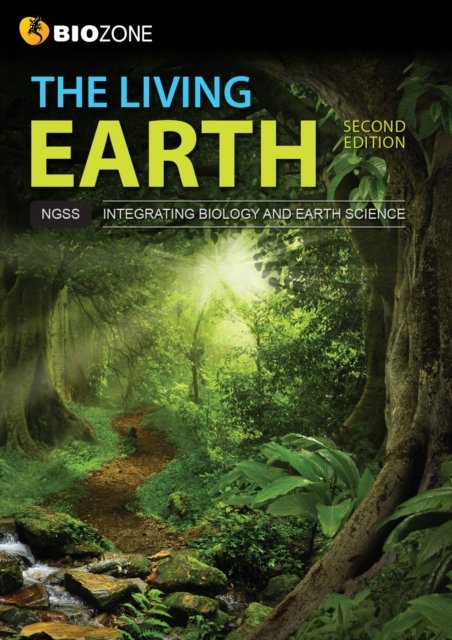
Av Dr Tracey Greenwood, Richard Allan, Lissa Bainbridge-Smith, Kent Pryor, 2020.
Student Edition
The Living Earth has been designed and written to meet the requirements of the California Science Framework (HS Three-Course Model). This phenomenon-based title is fully three-dimensional in its approach, employing the 5Es instructional model to encourage inquiry and build a deeper understanding of science as a discipline.
The book is organized into six instructional segments, with an additional reference chapter supporting mathematical and computational skills. The chapters build progressively on knowledge and skills and there is an interconnectedness throughout the book as students explore and explain phenomena. The analysis and interpretation of data and text, independent research and inquiry, and use of conceptual and physical models underpin the design of the activities. Practical investigations are clearly identified and easily accessible; no special kits are required. Students are encouraged, through the activities, to collaborate with their peers and be open to modifying their models and explanations based on evidence. Environmental literacy is well supported through checkpoints and questions, and design challenges are addressed in context as appropriate.
Features and benefits:
• A phenomenon-based approach employing the 5E instructional cycle, aligning with how students learn science.
• Each chapter opens with clear, achievable learning outcomes for students
• Anchoring phenomenon begins each chapter
• Full color throughout
• Practical investigations, with clear objectives and equipment lists
• Glossary encourages scientific literacy
• Specifically designed summative assessments conclude each chapter.
• Full integration of the three dimensions of the CA NGSS enables students to deepen understanding of Disciplinary Core Ideas through their use of Science and Engineering Practices and application of Crosscutting Concepts.
• The California Environmental Principles and Concepts are incorporated throughout.
• Understandings about the Nature of Science are supported through the Science and Engineering Practices and Crosscutting Concepts.
Ved å fullføre kjøpet aksepterer jeg kjøpsvilkårene.
Ikke tilgjengelig for Klikk&Hent
På nettlager. Bestilles fra England. Leveres normalt innen 5-8 virkedager.
Av Dr Tracey Greenwood, Richard Allan, Lissa Bainbridge-Smith, Kent Pryor, 2020.
Student Edition
The Living Earth has been designed and written to meet the requirements of the California Science Framework (HS Three-Course Model). This phenomenon-based title is fully three-dimensional in its approach, employing the 5Es instructional model to encourage inquiry and build a deeper understanding of science as a discipline.
The book is organized into six instructional segments, with an additional reference chapter supporting mathematical and computational skills. The chapters build progressively on knowledge and skills and there is an interconnectedness throughout the book as students explore and explain phenomena. The analysis and interpretation of data and text, independent research and inquiry, and use of conceptual and physical models underpin the design of the activities. Practical investigations are clearly identified and easily accessible; no special kits are required. Students are encouraged, through the activities, to collaborate with their peers and be open to modifying their models and explanations based on evidence. Environmental literacy is well supported through checkpoints and questions, and design challenges are addressed in context as appropriate.
Features and benefits:
• A phenomenon-based approach employing the 5E instructional cycle, aligning with how students learn science.
• Each chapter opens with clear, achievable learning outcomes for students
• Anchoring phenomenon begins each chapter
• Full color throughout
• Practical investigations, with clear objectives and equipment lists
• Glossary encourages scientific literacy
• Specifically designed summative assessments conclude each chapter.
• Full integration of the three dimensions of the CA NGSS enables students to deepen understanding of Disciplinary Core Ideas through their use of Science and Engineering Practices and application of Crosscutting Concepts.
• The California Environmental Principles and Concepts are incorporated throughout.
• Understandings about the Nature of Science are supported through the Science and Engineering Practices and Crosscutting Concepts.
Ved å fullføre kjøpet aksepterer jeg kjøpsvilkårene.
Ikke tilgjengelig for Klikk&Hent
På nettlager. Bestilles fra England. Leveres normalt innen 5-8 virkedager.
Ved å fullføre kjøpet aksepterer du kjøpsvilkårene.