Av David J. Haas, 2024.
Modern Development and Security Implications
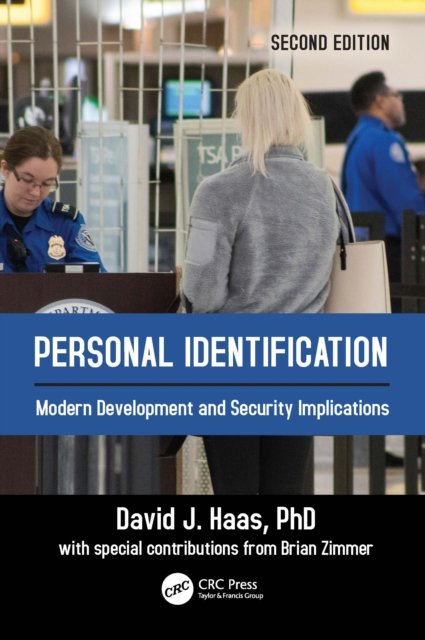
Personal Identification: Modern Development and Security Implications, Second Edition explains how personal identification and REAL ID became part of the American fabric along with their past centurys historical ID development. The development of the trusted and secure personal identification documents began with passports and has continued as social changes made IDs more essential. This book describes the convergence of technologies and hundreds of patents that produced our trusted and secure documents and IDs from our past right up through to today.
Key factors, that created todays need for public-issued mass ID, are addressed:
Personal identification documents (IDs) and the societal need for trusted identification by the public is a relatively new social phenomenon. In 1900, most people did not need or have any IDs until passports, with a photograph of the individual, became mandatory when Great Britain entered World War I in 1914. In the United States, the State-issued drivers license is probably the only trusted ID in ones wallet today, but they became trusted and secure documents only recently with the requirement for REAL ID. With the first photo drivers license issued by the State of Colorado in 1959, it took until 1984 for the last State (New York, 25 years later) to comply.
As a direct result of 9/11, where terrorists used fake drivers licenses to board planes, Congress passed the Real ID Act in 2005 to make all State-issued drivers licenses more trusted, uniform, and tamper-resistant what is now called the Enhanced Drivers License with non-drivers being issued Enhanced Identification Cards. And with this, every US citizen can now possess a trusted and secure personal identification document.
Personal Identification, Second Edition chronicles the path of personal identification measures including the latest developments of Real ID. Scholars and professional security managers understand that stability, security, and safety necessitate these identity measures to ensure a safer America. The book explains the various stages and advances, providing readers with a unique study of this fascinating history of the relationship between identity and the means by which one validates and proves their own identity. The enactment of the REAL ID Act of 2005, with more secure and tamper-resistant documents for each citizen of the United States, is being instituted so that one can trust: you are who you say you are. The State-issued drivers license is not a National ID Card it is a Nationally Recognized ID for each citizen.
Språk: Engelsk
Ikke tilgjengelig for Klikk&Hent
Midlertidig tomt på lager
Bestillingsvare. Forventes sendt om ca 9 dager

Av David J. Haas, 2024.
Modern Development and Security Implications
Personal Identification: Modern Development and Security Implications, Second Edition explains how personal identification and REAL ID became part of the American fabric along with their past centurys historical ID development. The development of the trusted and secure personal identification documents began with passports and has continued as social changes made IDs more essential. This book describes the convergence of technologies and hundreds of patents that produced our trusted and secure documents and IDs from our past right up through to today.
Key factors, that created todays need for public-issued mass ID, are addressed:
Personal identification documents (IDs) and the societal need for trusted identification by the public is a relatively new social phenomenon. In 1900, most people did not need or have any IDs until passports, with a photograph of the individual, became mandatory when Great Britain entered World War I in 1914. In the United States, the State-issued drivers license is probably the only trusted ID in ones wallet today, but they became trusted and secure documents only recently with the requirement for REAL ID. With the first photo drivers license issued by the State of Colorado in 1959, it took until 1984 for the last State (New York, 25 years later) to comply.
As a direct result of 9/11, where terrorists used fake drivers licenses to board planes, Congress passed the Real ID Act in 2005 to make all State-issued drivers licenses more trusted, uniform, and tamper-resistant what is now called the Enhanced Drivers License with non-drivers being issued Enhanced Identification Cards. And with this, every US citizen can now possess a trusted and secure personal identification document.
Personal Identification, Second Edition chronicles the path of personal identification measures including the latest developments of Real ID. Scholars and professional security managers understand that stability, security, and safety necessitate these identity measures to ensure a safer America. The book explains the various stages and advances, providing readers with a unique study of this fascinating history of the relationship between identity and the means by which one validates and proves their own identity. The enactment of the REAL ID Act of 2005, with more secure and tamper-resistant documents for each citizen of the United States, is being instituted so that one can trust: you are who you say you are. The State-issued drivers license is not a National ID Card it is a Nationally Recognized ID for each citizen.
Språk: Engelsk
Ikke tilgjengelig for Klikk&Hent
Midlertidig tomt på lager
Bestillingsvare. Forventes sendt om ca 9 dager
Ved å fullføre kjøpet aksepterer du kjøpsvilkårene.


Nettlager

Nettlager


Nettlager