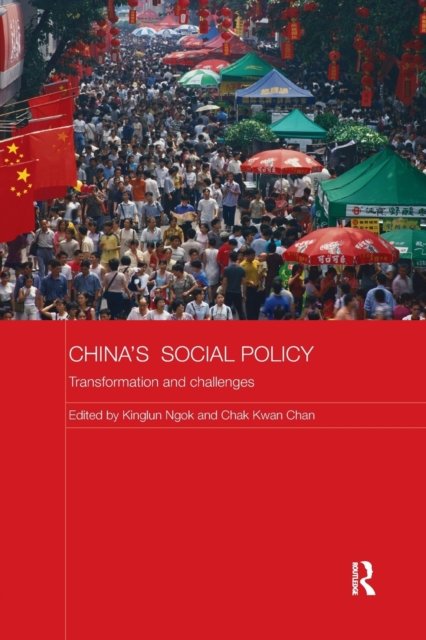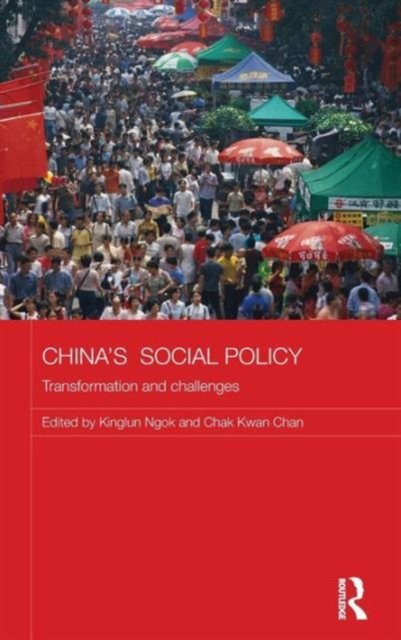
China''s Social Policy
Chak Kwan Chan, Kinglun Ngok
InnbundetEngelsk
Del av serien Comparative Development and Policy in Asia
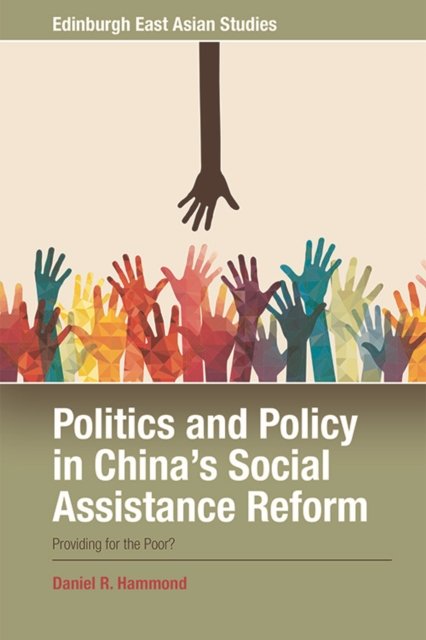
Av Daniel R. Hammond, 2018.Del av serien Edinburgh East Asian Studies.
Providing for the Poor?
Addresses a significant gap in current coverage of Chinese social policy in the reform era, namely coverage of the dibao programme. Provides an introduction to Chinese social assistance since the 1990s which challenges the official narrative of a smooth policy process with intended outcomes. Uses extensive primary Chinese language sources to support the arguments being made using a grounded analytical approachincluding newspaper reports, government speeches and interviews Every day in the People's Republic of China 70 million people receive help from the state through the minimum livelihood guarantee (dibao). What began as a reform in the city of Shanghai in the early 1990s is now a key component in the measures used by the Communist Party of China to maintain social stability and legitimacy. While scholars regularly discuss how effective dibao has been in alleviating poverty very little addresses what influenced its development. This book argues that in order to understand dibao we need to look at
Ikke tilgjengelig for Klikk&Hent
Midlertidig tomt på lager
Bestillingsvare. Forventes sendt om ca 8 dager
Av Daniel R. Hammond, 2018.Del av serien Edinburgh East Asian Studies.
Providing for the Poor?
Addresses a significant gap in current coverage of Chinese social policy in the reform era, namely coverage of the dibao programme. Provides an introduction to Chinese social assistance since the 1990s which challenges the official narrative of a smooth policy process with intended outcomes. Uses extensive primary Chinese language sources to support the arguments being made using a grounded analytical approachincluding newspaper reports, government speeches and interviews Every day in the People's Republic of China 70 million people receive help from the state through the minimum livelihood guarantee (dibao). What began as a reform in the city of Shanghai in the early 1990s is now a key component in the measures used by the Communist Party of China to maintain social stability and legitimacy. While scholars regularly discuss how effective dibao has been in alleviating poverty very little addresses what influenced its development. This book argues that in order to understand dibao we need to look at
Ikke tilgjengelig for Klikk&Hent
Midlertidig tomt på lager
Bestillingsvare. Forventes sendt om ca 8 dager
Ved å fullføre kjøpet aksepterer du kjøpsvilkårene.