Pensum -10%

Redigert av Annemarie Ridder, Peter van der Sijde, Gerben Blaauw, Christoph Diensberg, 2008.Del av serien Contributions to Management Science.
Cases for Education and Training
“Entrepreneurship that is something you learn in practice”. “Entreprene- ship is learning by doing”. This is often heard when you tell others that you teach entrepreneurship, but maybe entrepreneurship is more “doing by learning”. Nevertheless, in entrepreneurship practice and theory are int- woven. For this reason the Learning Cycle introduced by Kolb (1984) is an often used teaching approach. According to this Learning Cycle there are four phases (“cycle”) that are connected: 1. Concrete experience (“doing”, “experiencing”) 2. Reflection (“reflecting on the experience”) 3. Conceptualization (“learning from the experience”) 4. Experimentation (“bring what you learned into practice”) In teaching you can enter this cycle at any stage, depending on the students. And that brings us to the different types of students. Based on Hills et al. (1998) a plethora of student groups can be distinguished (of course this list is not exhaustive), e.g: Ph.D. students, who do a doctoral programme in Entrepreneurship; the emphasis is on theory/science. DBA students, who do a doctoral programme that is, in comparison to the Ph.D. more practice oriented. MBA students, who take entrepreneurship as one of the courses in their programme. Most of the time MBA students are mature students, who after some work experience return to the university; the programme is practice oriented.
Språk: Engelsk
Ikke tilgjengelig for Klikk&Hent
Midlertidig tomt på lager
Bestillingsvare. Forventes sendt om ca 20 dager
Redigert av Annemarie Ridder, Peter van der Sijde, Gerben Blaauw, Christoph Diensberg, 2008.Del av serien Contributions to Management Science.
Cases for Education and Training
“Entrepreneurship that is something you learn in practice”. “Entreprene- ship is learning by doing”. This is often heard when you tell others that you teach entrepreneurship, but maybe entrepreneurship is more “doing by learning”. Nevertheless, in entrepreneurship practice and theory are int- woven. For this reason the Learning Cycle introduced by Kolb (1984) is an often used teaching approach. According to this Learning Cycle there are four phases (“cycle”) that are connected: 1. Concrete experience (“doing”, “experiencing”) 2. Reflection (“reflecting on the experience”) 3. Conceptualization (“learning from the experience”) 4. Experimentation (“bring what you learned into practice”) In teaching you can enter this cycle at any stage, depending on the students. And that brings us to the different types of students. Based on Hills et al. (1998) a plethora of student groups can be distinguished (of course this list is not exhaustive), e.g: Ph.D. students, who do a doctoral programme in Entrepreneurship; the emphasis is on theory/science. DBA students, who do a doctoral programme that is, in comparison to the Ph.D. more practice oriented. MBA students, who take entrepreneurship as one of the courses in their programme. Most of the time MBA students are mature students, who after some work experience return to the university; the programme is practice oriented.
Språk: Engelsk
Ikke tilgjengelig for Klikk&Hent
Midlertidig tomt på lager
Bestillingsvare. Forventes sendt om ca 20 dager
Ved å fullføre kjøpet aksepterer du kjøpsvilkårene.














New Methods in Fixed Income Modeling
971,-

Demystifying Leadership in Iceland
854,-

Entrepreneurship Education and Research in the Middle East and North Africa (MENA)
1 124,-

Diaspora Networks in International Business
1 340,-
Open Innovation Business Modeling
1 214,-

Enterprise Resource Planning and Business Intelligence Systems for Information Quality
584,-

Innovation and Supply Chain Management
2 429,-

Innovation in High Reliability Ambidextrous Organizations
971,-
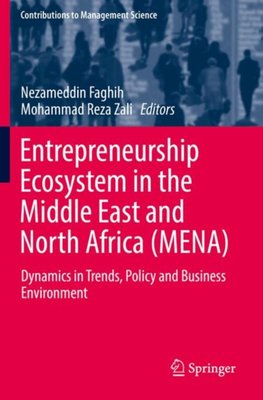
Entrepreneurship Ecosystem in the Middle East and North Africa (MENA)
2 429,-

Executive Decision Synthesis
1 124,-
New Methods in Fixed Income Modeling
971,-
Demystifying Leadership in Iceland
854,-
Entrepreneurship Education and Research in the Middle East and North Africa (MENA)
1 124,-
Diaspora Networks in International Business
1 340,-
Open Innovation Business Modeling
1 214,-
Enterprise Resource Planning and Business Intelligence Systems for Information Quality
584,-
Innovation and Supply Chain Management
2 429,-
Innovation in High Reliability Ambidextrous Organizations
971,-
Entrepreneurship Ecosystem in the Middle East and North Africa (MENA)
2 429,-
Executive Decision Synthesis
1 124,-