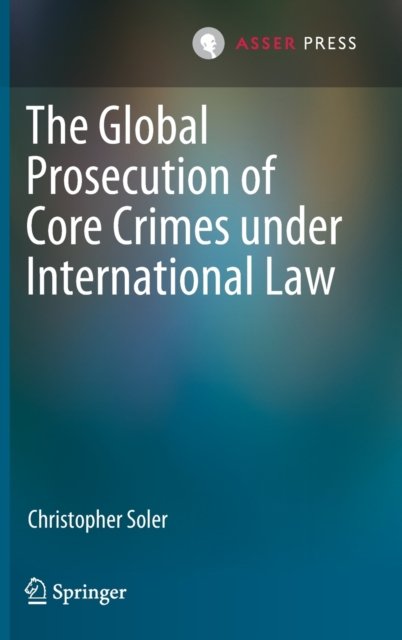
The Global Prosecution of Core Crimes under International Law
Av Christopher Soler, 2019.
This book deals with the prosecution of core crimes and constitutes the first comprehensive analysis of the horizontal and vertical systems of enforcement of international criminal law and of their inter-relationship. It provides a global jurisprudential exposition in assessing the grounds for refusal of surrender to the International Criminal Court and of extradition to another State. It also offers insights into legal perspectives which improve the prevailing enforcement regimes of various models of criminal justice, including hybrid criminal tribunals, special criminal courts, judicial panels and partnerships, and other budding sui generis judicial and/or prosecutorial institutions.
The book espouses a human rights law-oriented critique to the enforcement of domestic, regional and international criminal justice and is aimed at legal practitioners (prosecutors, defence lawyers, magistrates and judges), jurists, criminal justice experts, penologists, legal researchers, human rights activists and law students.
Christopher Soler lectures Maltese criminal law, international criminal law and public international law at the University of Malta. He obtained his Ph.D. from the University of Amsterdam in The Netherlands.
Språk: Engelsk
Ikke tilgjengelig for Klikk&Hent
Midlertidig tomt på lager
Bestillingsvare. Forventes sendt om ca 20 dager
The Global Prosecution of Core Crimes under International Law
Av Christopher Soler, 2019.
This book deals with the prosecution of core crimes and constitutes the first comprehensive analysis of the horizontal and vertical systems of enforcement of international criminal law and of their inter-relationship. It provides a global jurisprudential exposition in assessing the grounds for refusal of surrender to the International Criminal Court and of extradition to another State. It also offers insights into legal perspectives which improve the prevailing enforcement regimes of various models of criminal justice, including hybrid criminal tribunals, special criminal courts, judicial panels and partnerships, and other budding sui generis judicial and/or prosecutorial institutions.
The book espouses a human rights law-oriented critique to the enforcement of domestic, regional and international criminal justice and is aimed at legal practitioners (prosecutors, defence lawyers, magistrates and judges), jurists, criminal justice experts, penologists, legal researchers, human rights activists and law students.
Christopher Soler lectures Maltese criminal law, international criminal law and public international law at the University of Malta. He obtained his Ph.D. from the University of Amsterdam in The Netherlands.
Språk: Engelsk
Ikke tilgjengelig for Klikk&Hent
Midlertidig tomt på lager
Bestillingsvare. Forventes sendt om ca 20 dager
Ved å fullføre kjøpet aksepterer du kjøpsvilkårene.