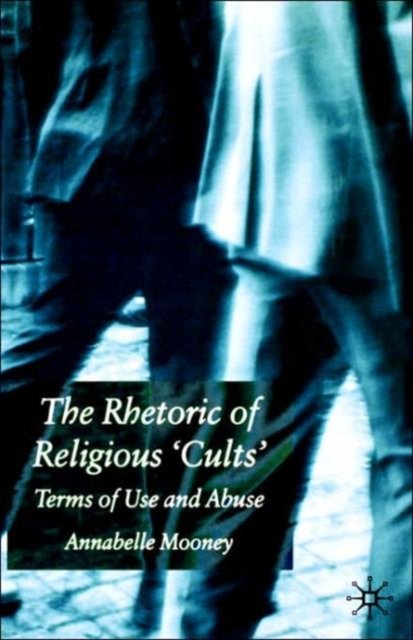
The Rhetoric of Religious Cults
Av A. Mooney, 2005.
Terms of Use and Abuse
This study's departure point is the notion that "cults" have a distinctive language and way of recruiting members. First outlining a rhetorical framework, which encompasses contemporary discourse analysis, the persuasive texts of three movements--Scientology, Jehovah's Witnesses and Children of God--are analyzed in detail and their discourse compared with other kinds of recruitment literature. Cults' distinctive negative profile in society is not matched by a linguistic typology. Indeed, this negative profile seems to rest on the semantics and application of the term "cult" itself.
Språk: Engelsk
Ikke tilgjengelig for Klikk&Hent
Midlertidig tomt på lager
Bestillingsvare. Forventes sendt om ca 20 dager
Oppdag mer
The Rhetoric of Religious Cults
Av A. Mooney, 2005.
Terms of Use and Abuse
This study's departure point is the notion that "cults" have a distinctive language and way of recruiting members. First outlining a rhetorical framework, which encompasses contemporary discourse analysis, the persuasive texts of three movements--Scientology, Jehovah's Witnesses and Children of God--are analyzed in detail and their discourse compared with other kinds of recruitment literature. Cults' distinctive negative profile in society is not matched by a linguistic typology. Indeed, this negative profile seems to rest on the semantics and application of the term "cult" itself.
Oppdag mer
Språk: Engelsk
Ikke tilgjengelig for Klikk&Hent
Midlertidig tomt på lager
Bestillingsvare. Forventes sendt om ca 20 dager
Ved å fullføre kjøpet aksepterer du kjøpsvilkårene.