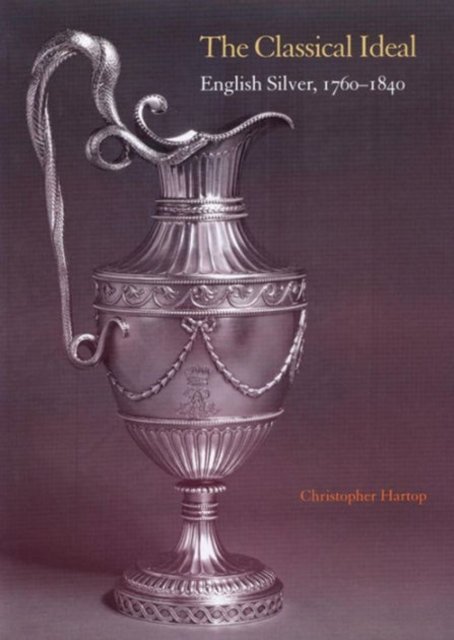
The Classical Ideal
Av Christopher Hartop, 2010.
English Silver, 1760-1840
The second half of the eighteenth century saw an enthusiastic revival of the use of shapes and decoration from classical architecture in the design of furniture, ceramics and silver. A reaction against the curving outlines and elaborate decoration of the rococo, neo-classicism was promoted as a return to the ideal proportions and balance of the ancient world. The style's chief proponents were members of the emerging profession of architecture such as James Wyatt and Robert Adam, who also designed silver, and their contribution to the elegant forms and simple decoration of domestic silver of the period is assessed in this book. The part played by industrialization in the development of the style is also examined, as is the increasingly important role of retailers such as Rundell, Bridge & Rundell. In the early nineteenth century, Rundell's were at the forefront of the adoption of a new imperial style based no longer on classical architecture but on classical sculpture.
Ved å fullføre kjøpet aksepterer jeg kjøpsvilkårene.
Ikke tilgjengelig for Klikk&Hent
På nettlager. Bestilles fra England. Leveres normalt innen 5-8 virkedager.
Oppdag mer
The Classical Ideal
Av Christopher Hartop, 2010.
English Silver, 1760-1840
The second half of the eighteenth century saw an enthusiastic revival of the use of shapes and decoration from classical architecture in the design of furniture, ceramics and silver. A reaction against the curving outlines and elaborate decoration of the rococo, neo-classicism was promoted as a return to the ideal proportions and balance of the ancient world. The style's chief proponents were members of the emerging profession of architecture such as James Wyatt and Robert Adam, who also designed silver, and their contribution to the elegant forms and simple decoration of domestic silver of the period is assessed in this book. The part played by industrialization in the development of the style is also examined, as is the increasingly important role of retailers such as Rundell, Bridge & Rundell. In the early nineteenth century, Rundell's were at the forefront of the adoption of a new imperial style based no longer on classical architecture but on classical sculpture.
Oppdag mer
Ved å fullføre kjøpet aksepterer jeg kjøpsvilkårene.
Ikke tilgjengelig for Klikk&Hent
På nettlager. Bestilles fra England. Leveres normalt innen 5-8 virkedager.
Ved å fullføre kjøpet aksepterer du kjøpsvilkårene.