History of Frontiers
Av Ashutosh Singh, 2025.
The Strategic Crossroads of Gilgit-Baltistan, 1839 to 2019
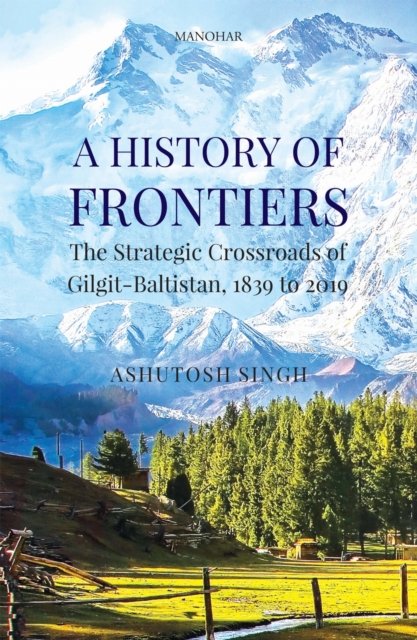
This book is a detailed yet concise study of the history and evolving geopolitics of Gilgit-Baltistan from 1839 to 2019. Nestled at the crossroads of Central, South, and West Asia, this remote region has long been shaped by local rivalries and global power struggles. The study traces how British colonial interests, especially during the Great Game with Russia, helped define the region’s political and strategic importance. It highlights the founding of the Gilgit Agency and the challenges the British faced in dealing with the fiercely independent local tribes. The narrative moves through the nineteenth and early twentieth centuries, covering key moments like the Chitral crisis and military reforms under Lord Kitchener. It then shifts to the post-1947 landscape, where the Partition of India and Pakistan’s control over Gilgit-Baltistan created a new set of tensions. The book explores how, following independence, Pakistan gradually tightened its grip through administrative changes and infrastructure projects like the Karakoram Highway, often at the cost of local autonomy and cultural identity. In recent decades, the region’s strategic value has grown even more with China’s involvement, particularly through the China-Pakistan Economic Corridor (CPEC).
Språk: Engelsk
Ved å fullføre kjøpet aksepterer jeg kjøpsvilkårene.
Oppdag mer
History of Frontiers
Av Ashutosh Singh, 2025.
The Strategic Crossroads of Gilgit-Baltistan, 1839 to 2019
This book is a detailed yet concise study of the history and evolving geopolitics of Gilgit-Baltistan from 1839 to 2019. Nestled at the crossroads of Central, South, and West Asia, this remote region has long been shaped by local rivalries and global power struggles. The study traces how British colonial interests, especially during the Great Game with Russia, helped define the region’s political and strategic importance. It highlights the founding of the Gilgit Agency and the challenges the British faced in dealing with the fiercely independent local tribes. The narrative moves through the nineteenth and early twentieth centuries, covering key moments like the Chitral crisis and military reforms under Lord Kitchener. It then shifts to the post-1947 landscape, where the Partition of India and Pakistan’s control over Gilgit-Baltistan created a new set of tensions. The book explores how, following independence, Pakistan gradually tightened its grip through administrative changes and infrastructure projects like the Karakoram Highway, often at the cost of local autonomy and cultural identity. In recent decades, the region’s strategic value has grown even more with China’s involvement, particularly through the China-Pakistan Economic Corridor (CPEC).
Oppdag mer
Språk: Engelsk
Ved å fullføre kjøpet aksepterer jeg kjøpsvilkårene.
Ved å fullføre kjøpet aksepterer du kjøpsvilkårene.