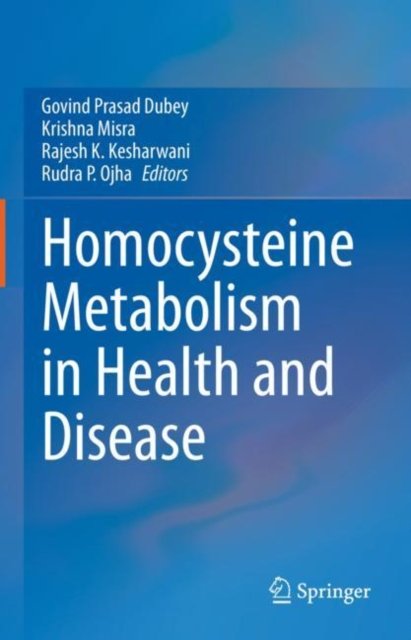
Homocysteine Metabolism in Health and Disease
Redigert av Govind Prasad Dubey, Rudra P. Ojha, Rajesh K. Kesharwani, Krishna Misra, 2022.
This book comprehensively reviews the association of homocysteine metabolism with the etiology of various human disorders. The well-defined chapters embedded the central and peripheral effects of homocysteine metabolism intricately related with cardiovascular, neurodegenerative, metabolic, and autoimmune disorders. Further, it discusses the mechanisms of perturbance of cellular proteostasis by elevated homocysteine levels and provides a comprehensive account of pathophysiological consequences and clinical implications of homocysteine-containing proteins. The book also reviews association of genetic variants of homocysteine metabolic genes with type 2 diabetes mellitus and obesity. It also describes the molecular mechanism of hyperhomocysteinemia in the negative/feedback regulation of neural stem cell proliferation and alterations in DNA methylation. Taken together, it summarizes the mechanisms of hyper homocysteinemia-induced endothelial dysfunction and physiological functions of hydrogen sulfide as the protective agent.
Språk: Engelsk
Homocysteine Metabolism in Health and Disease
Redigert av Govind Prasad Dubey, Rudra P. Ojha, Rajesh K. Kesharwani, Krishna Misra, 2022.
This book comprehensively reviews the association of homocysteine metabolism with the etiology of various human disorders. The well-defined chapters embedded the central and peripheral effects of homocysteine metabolism intricately related with cardiovascular, neurodegenerative, metabolic, and autoimmune disorders. Further, it discusses the mechanisms of perturbance of cellular proteostasis by elevated homocysteine levels and provides a comprehensive account of pathophysiological consequences and clinical implications of homocysteine-containing proteins. The book also reviews association of genetic variants of homocysteine metabolic genes with type 2 diabetes mellitus and obesity. It also describes the molecular mechanism of hyperhomocysteinemia in the negative/feedback regulation of neural stem cell proliferation and alterations in DNA methylation. Taken together, it summarizes the mechanisms of hyper homocysteinemia-induced endothelial dysfunction and physiological functions of hydrogen sulfide as the protective agent.
Språk: Engelsk
Ved å fullføre kjøpet aksepterer du kjøpsvilkårene.