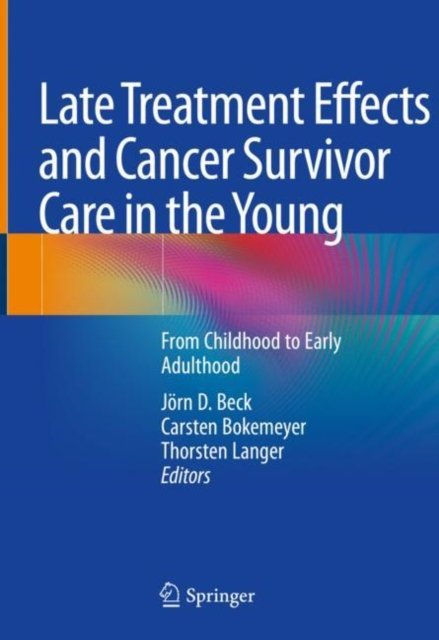
Late Treatment Effects and Cancer Survivor Care in the Young
Redigert av Carsten Bokemeyer, Jörn D. Beck, Thorsten Langer, 2020.
From Childhood to Early Adulthood
This comprehensive guide describes the aftercare that is appropriate in young cancer patients and discusses in detail the risk and detection of treatment sequelae. It explains the impacts on body and mind of both the disease itself and the different risk-adapted cancer treatments currently in use. Clear guidance is provided on diagnosis and management of the principal treatment-related toxicities in different organs and organ systems and for a wide variety of tumor types. In addition, the role of genetic polymorphisms in the development of adverse therapy-related outcomes is explored, and advice offered on genetic counselling. As the number of long-term survivors of childhood cancer and of cancer in young adults continues to grow, so issues surrounding potential sequelae, second malignancies, and quality of life are becoming ever more important. All practitioners involved in the care of young cancer patients will find this book to be a helpful source of up-to-date information andassistance.
Språk: Engelsk
Oppdag mer
Late Treatment Effects and Cancer Survivor Care in the Young
Redigert av Carsten Bokemeyer, Jörn D. Beck, Thorsten Langer, 2020.
From Childhood to Early Adulthood
This comprehensive guide describes the aftercare that is appropriate in young cancer patients and discusses in detail the risk and detection of treatment sequelae. It explains the impacts on body and mind of both the disease itself and the different risk-adapted cancer treatments currently in use. Clear guidance is provided on diagnosis and management of the principal treatment-related toxicities in different organs and organ systems and for a wide variety of tumor types. In addition, the role of genetic polymorphisms in the development of adverse therapy-related outcomes is explored, and advice offered on genetic counselling. As the number of long-term survivors of childhood cancer and of cancer in young adults continues to grow, so issues surrounding potential sequelae, second malignancies, and quality of life are becoming ever more important. All practitioners involved in the care of young cancer patients will find this book to be a helpful source of up-to-date information andassistance.
Oppdag mer
Språk: Engelsk
Ved å fullføre kjøpet aksepterer du kjøpsvilkårene.