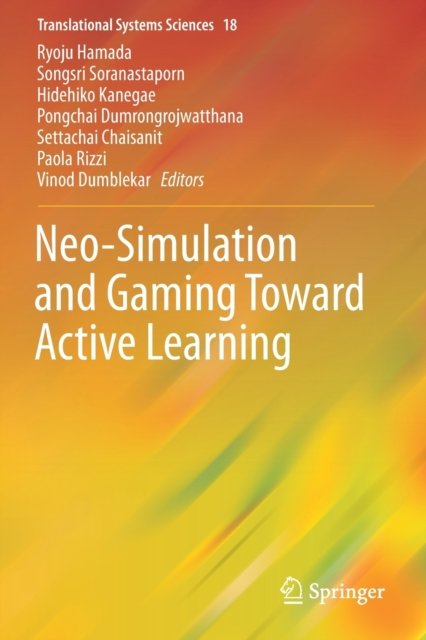
Neo-Simulation and Gaming Toward Active Learning
Redigert av Hidehiko Kanegae, Vinod Dumblekar, Songsri Soranastaporn, Settachai Chaisanit, Ryoju Hamada, Pongchai Dumrongrojwatthana, Paola Rizzi, 2020.Del av serien Translational Systems Sciences.
This book provides tips to teachers for moving toward active learning by using simulation and gaming. The book is a rare reference for teachers who wish to initiate active learning by applying many real experiences from world experts in simulation and gaming. This cumulative wisdom comes from cutting-edge trials reported at the 49th International Simulation and Gaming Association's annual conference in Thailand 9-13 July 2018. The importance of changing teachers' one-way lecture approach to that of active learning has been commonly understood for several decades and has been promoted especially in recent years in Asian universities. Simulation and gaming meets the requirements of such teaching programs, especially for active learning, but there are few books or references on how to gamify a lecture. This book serves as a guide to facilitate that change. The author recognizes the duty to provide readers with fixed directions toward simulation and gaming in the next generation, which have still not been fully elucidated. Developing a simulation and gaming culture and making it sustainable in the next decade are the purpose of this book.
Språk: Engelsk
Oppdag mer
Neo-Simulation and Gaming Toward Active Learning
Redigert av Hidehiko Kanegae, Vinod Dumblekar, Songsri Soranastaporn, Settachai Chaisanit, Ryoju Hamada, Pongchai Dumrongrojwatthana, Paola Rizzi, 2020.Del av serien Translational Systems Sciences.
This book provides tips to teachers for moving toward active learning by using simulation and gaming. The book is a rare reference for teachers who wish to initiate active learning by applying many real experiences from world experts in simulation and gaming. This cumulative wisdom comes from cutting-edge trials reported at the 49th International Simulation and Gaming Association's annual conference in Thailand 9-13 July 2018. The importance of changing teachers' one-way lecture approach to that of active learning has been commonly understood for several decades and has been promoted especially in recent years in Asian universities. Simulation and gaming meets the requirements of such teaching programs, especially for active learning, but there are few books or references on how to gamify a lecture. This book serves as a guide to facilitate that change. The author recognizes the duty to provide readers with fixed directions toward simulation and gaming in the next generation, which have still not been fully elucidated. Developing a simulation and gaming culture and making it sustainable in the next decade are the purpose of this book.
Oppdag mer
Språk: Engelsk
Ved å fullføre kjøpet aksepterer du kjøpsvilkårene.