Hopp til hovedinnholdet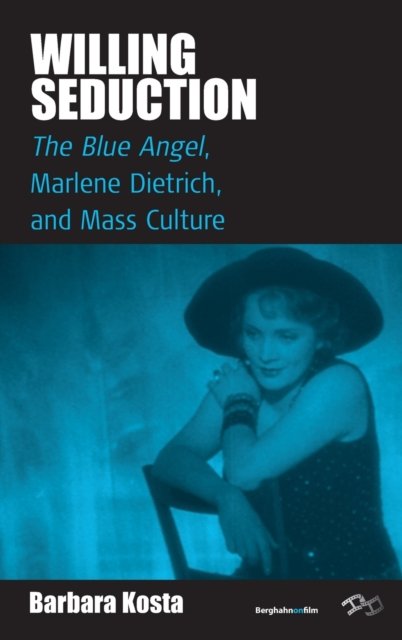
Willing Seduction
Av Barbara Kosta, 2009.Del av serien Film Europa.
The Blue Angel, Marlene Dietrich, and Mass Culture
Josef von Sternberg’s 1930 film The Blue Angel (Der blaue Engel) is among the best known films of the Weimar Republic (1919-1933). A significant landmark as one of Germany’s first major sound films, it is known primarily for launching Marlene Dietrich into Hollywood stardom and for initiating the mythic pairing of the Austrian-born American director von Sternberg with the star performer Dietrich.
This fascinating cultural history of The Blue Angel provides a new interpretive framework with which to approach this classic Weimar film and suggests that discourses on mass and high culture are integral to the film’s thematic and narrative structure. These discourses surface above all in the relationship between the two main characters, the cabaret entertainer Lola Lola (Marlene Dietrich) and the high school teacher Immanuel Rath (one-time Oscar winner Emil Jannings). In addition to offering insight into some of the major debates that informed the Weimar Republic, this book demonstrates that similar issues continue to shape the contemporary cultural landscape of Germany. Barbara Kosta thus also looks at Dietrich as a contemporary cultural icon and at her symbolic value since German unification and at Lola Lola’s various “incarnations.”
Språk: Engelsk
1 419,-
Ikke tilgjengelig for Klikk&Hent
Midlertidig tomt på lager
Bestillingsvare. Forventes sendt om ca 11 dager
Willing Seduction
Av Barbara Kosta, 2009.Del av serien Film Europa.
The Blue Angel, Marlene Dietrich, and Mass Culture
Josef von Sternberg’s 1930 film The Blue Angel (Der blaue Engel) is among the best known films of the Weimar Republic (1919-1933). A significant landmark as one of Germany’s first major sound films, it is known primarily for launching Marlene Dietrich into Hollywood stardom and for initiating the mythic pairing of the Austrian-born American director von Sternberg with the star performer Dietrich.
This fascinating cultural history of The Blue Angel provides a new interpretive framework with which to approach this classic Weimar film and suggests that discourses on mass and high culture are integral to the film’s thematic and narrative structure. These discourses surface above all in the relationship between the two main characters, the cabaret entertainer Lola Lola (Marlene Dietrich) and the high school teacher Immanuel Rath (one-time Oscar winner Emil Jannings). In addition to offering insight into some of the major debates that informed the Weimar Republic, this book demonstrates that similar issues continue to shape the contemporary cultural landscape of Germany. Barbara Kosta thus also looks at Dietrich as a contemporary cultural icon and at her symbolic value since German unification and at Lola Lola’s various “incarnations.”
1 419,-
Språk: Engelsk
Ikke tilgjengelig for Klikk&Hent
Midlertidig tomt på lager
Bestillingsvare. Forventes sendt om ca 11 dager
1 419,-
Ved å fullføre kjøpet aksepterer du kjøpsvilkårene.