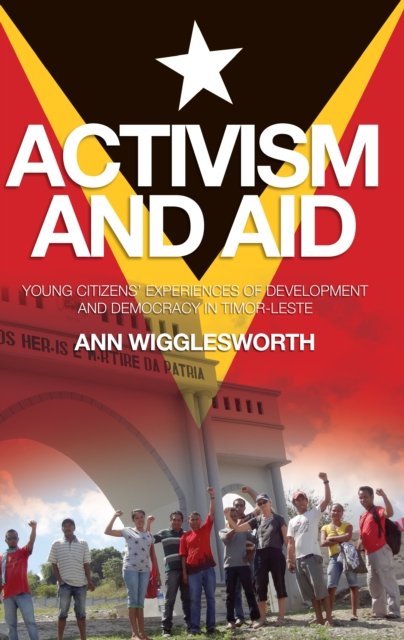
Activism and Aid
Av Ann Wigglesworth, 2016.
Young Citizens' Experiences of Development and Democracy in Timorleste
Timor-Leste’s independence was forged at a time when international developmental theory had rejected top down approaches and recognised the importance of participatory approaches. When the United Nations and a multitude of bilateral and multilateral non-government organisations arrived in Timor-Leste in 1999 it was hoped that the international intervention would at last produce a development success story. But independence also brought the realisation that dreams for an independent Timor-Leste varied, often according to the dreamer’s generation. Three generations of Timorese: the political elite, a younger generation of independence activists (gerasaun foun) and today’s youth of independent Timor-Leste, each bring their own experiences and face different challenges in Timor-Leste. Today stark contrasts between the values of customary life and those of the modernising world place both community leaders and young Timorese at a crossroads. The experiences of the Timorese are unique, but this book reflects a broader analysis about how aid-influenced processes of development can work in greater harmony with people to realise their own visions of the future of the nation.
Ikke tilgjengelig for Klikk&Hent
Midlertidig tomt på lager
Bestillingsvare. Forventes sendt om ca 13 dager
Activism and Aid
Av Ann Wigglesworth, 2016.
Young Citizens' Experiences of Development and Democracy in Timorleste
Timor-Leste’s independence was forged at a time when international developmental theory had rejected top down approaches and recognised the importance of participatory approaches. When the United Nations and a multitude of bilateral and multilateral non-government organisations arrived in Timor-Leste in 1999 it was hoped that the international intervention would at last produce a development success story. But independence also brought the realisation that dreams for an independent Timor-Leste varied, often according to the dreamer’s generation. Three generations of Timorese: the political elite, a younger generation of independence activists (gerasaun foun) and today’s youth of independent Timor-Leste, each bring their own experiences and face different challenges in Timor-Leste. Today stark contrasts between the values of customary life and those of the modernising world place both community leaders and young Timorese at a crossroads. The experiences of the Timorese are unique, but this book reflects a broader analysis about how aid-influenced processes of development can work in greater harmony with people to realise their own visions of the future of the nation.
Ikke tilgjengelig for Klikk&Hent
Midlertidig tomt på lager
Bestillingsvare. Forventes sendt om ca 13 dager
Ved å fullføre kjøpet aksepterer du kjøpsvilkårene.